How to Quickly Relieve Knee Pain and Swelling – Old, Tried-and-True Recipes
Here are some traditional and natural approaches that can help with knee pain:
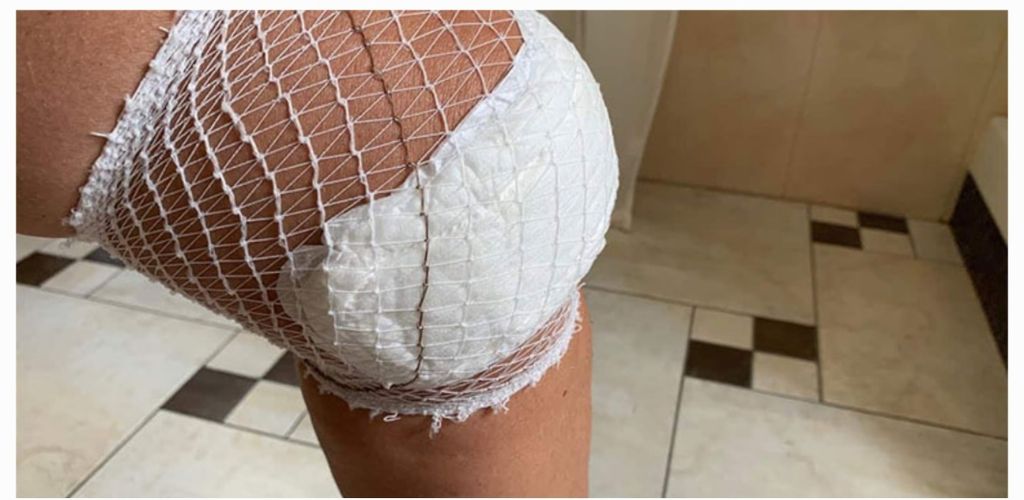
Cabbage Wraps – An Ancient Home Remedy
Cabbage wraps are a very ancient home remedy for swelling and inflammation, proven in many cultures. The leaves contain sulfur compounds and anthocyanins, which are believed to have anti-inflammatory properties.
Here’s how:
Take large, fresh white cabbage or Brussels sprout leaves. Wash them thoroughly and pat them dry.
Remove the thick central vein to make the leaves more flexible.
Place the leaves on a clean kitchen towel and flatten them with a glass bottle or rolling pin until the veins are slightly broken and some juice begins to ooze out. This activates the active ingredients. Place several layers of prepared cabbage leaves directly over the painful, swollen knee.
Secure the bandage with a cloth or gauze, but do not over-tighten it to avoid restricting circulation.
Leave the bandage on for at least 2 hours or overnight. Change the leaves every few hours if necessary.
Vinegar Wrap – Cooling and Anti-inflammatory
Vinegar is traditionally used for swelling and bruises due to its cooling effect and ability to stimulate circulation.
How to make:
Mix apple cider vinegar and cold water in a 1:1 ratio.
Soak a clean cloth (e.g., cotton or linen) in the mixture and wring it out gently.
Place the damp cloth over the knee and secure it with a dry cloth or aluminum foil to retain moisture.
Leave the bandage on for 30 to 60 minutes. Repeat several times a day if necessary.
Quark Wrap – Cooling and Soothing
Quark wraps are a popular home remedy for inflammation and swelling, as quark provides a pleasant cooling sensation and is said to contain anti-inflammatory substances.
How to make:
Use low-fat quark at room temperature (not straight from the refrigerator, otherwise it will be too cold).
Spread a layer of quark about 0.5 to 1 cm thick on a clean cloth (e.g., a paper towel or gauze).
Place the cloth, quark side down, over the painful knee.
Cover it with another cloth to protect your clothes.
Leave the cloth on until the quark dries and dissolves (about 20 to 30 minutes). Then remove it.
Ginger – Anti-inflammatory from the Inside Out
Ginger is known for its powerful anti-inflammatory properties and can be used both internally as a tea and externally as a compress. As a tea:
Cut a 2- to 3-cm piece of fresh ginger into thin slices or grate it.
Pour hot water over it and let it steep for 10 to 15 minutes.
Drink 2 to 3 cups daily.
As a compress:
Grate a larger piece of ginger and squeeze out the juice.
Mix the ginger juice with a little warm water and soak a cloth in it.
Place the damp cloth over your knee and let it sit for 20 to 30 minutes. Caution: Ginger can irritate the skin, so test on a small area first.
Turmeric – The Golden Spice
Turmeric contains curcumin, a powerful anti-inflammatory and antioxidant. It can be used internally (as a seasoning in food or as “golden milk”) and externally.
As a paste (externally):
Mix turmeric powder with a little warm water and possibly a little coconut oil until it forms a thick paste. Apply the paste to your knee and cover it with a cloth, as turmeric is very staining.
Leave it on for 20 to 30 minutes and then rinse thoroughly.
How to make “Golden Milk” (interior):
Heat 250 ml of milk (or plant-based milk) with 1 teaspoon of turmeric powder, a pinch of black pepper (important for curcumin absorption), a little ginger, and, optionally, honey.
Drink daily.
Important Notes:
Elevation: Elevate your knee whenever possible to reduce swelling.
Cooling (initial phase): For acute swelling and recent injuries, cooling with ice (wrapped in a cloth, not directly on the skin) for 15 to 20 minutes, several times a day, is very helpful.
Rest: Give your knee enough rest to promote healing. Avoid strain. Light exercise (afterward): Once the acute pain subsides, light, non-weight-bearing exercise (e.g., in water) can be helpful in maintaining joint mobility.
Consult a doctor: As mentioned at the beginning, if you experience severe pain, fever, redness, overheating, or if symptoms persist or worsen, you should definitely consult a doctor. There may be more serious causes (arthritis, meniscus injury, ligament injury) that require specific treatment.