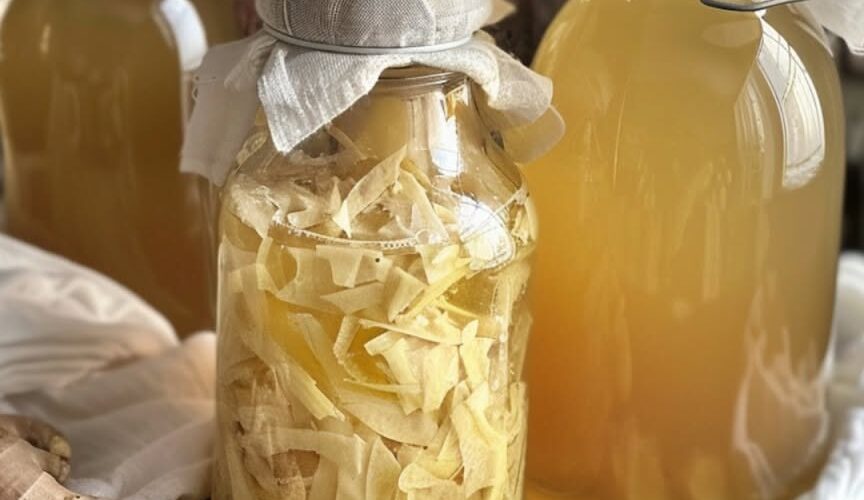
A warm drink made with fresh ginger stimulates blood circulation and digestion, helping to eliminate excess fluid. While the liver and kidneys are primarily responsible for detoxification, ginger-lemon water supports the body’s natural elimination processes.
Ingredients (for 1 liter)
Fresh ginger: 3–4 cm piece (peeled and thinly sliced or grated)
Water: 1 liter
Lemon: Juice of half an organic lemon (and a few slices for serving)
Optional: 1 teaspoon of honey or a few cucumber slices (to enhance the diuretic effect)
Preparation:
Boil: Bring 1 liter of water to a boil in a pot, then add the sliced or grated ginger.
Stir: Reduce heat, cover the pot, and simmer for 10–15 minutes. This releases the active gingerols.
Strain and refine: Strain the infusion and let it cool to hand temperature. Only then squeeze out the lemon juice (to preserve the vitamin C) and add a little honey, if desired.
How it works:
Relieves bloating and constipation: The active ingredients in ginger stimulate stomach acid production and intestinal activity, thus reducing gas. When drunk warm, the essential oils and steam also soothe a blocked nose and clear facial skin.
Reduces water retention: Ginger has a mild diuretic effect, stimulates lymphatic circulation and kidney function, and thus helps to eliminate excess water from the tissues.
Promotes digestion: The lemon-ginger mixture stimulates bile secretion, which facilitates fat digestion and soothes the stomach.
For optimal results, drink one glass on an empty stomach in the morning and distribute the remaining glasses throughout the day.