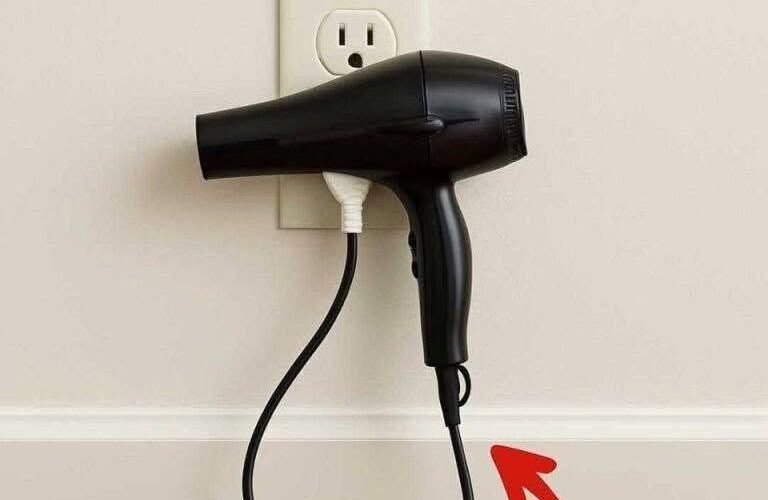
- Acute fire hazard due to short circuit
The high humidity in the bathroom causes condensation to form inside the casing. If the device is plugged in, this condensation can cause a short circuit and a fire.
- Accidental activation
A careless touch, romping pets, or playing children can easily trigger the switch accidentally. If the hairdryer is lying on a towel or plastic surface, it will melt within minutes and catch fire.
- Deadly water hazard
If a plugged-in hairdryer falls into a filled sink or bathtub, there is an immediate risk of electrocution – even if the device is switched off, the switch remains live.
- Phantom load
Many modern hairdryers with electronic controls continuously consume standby power even when switched off, unnecessarily increasing your electricity bill.
- Danger from a Defective Overheating Protection
If the thermostat in the hairdryer is defective or dusty, the device can overheat gradually, even if the power cord isn’t connected, and ignite surrounding objects.
- Cable Wear and Fire
Cables that are constantly live wear out faster at the kinks. Damaged insulation can cause sparks to form unnoticed.
- Danger to Pets
Curious dogs or cats that chew on live cables risk fatal electric shocks or severe burns to their mouths.
- Power Surge Damage During Thunderstorms
Voltage spikes in the power grid—for example, from lightning strikes—can instantly destroy small appliances plugged into the mains, cause meltdowns, or damage the socket.
- Accelerated Component Aging
The constant electrical voltage puts a strain on capacitors and circuit boards inside the hairdryer. This significantly reduces the device’s lifespan.
- Gradual Contact Corrosion
In the humid bathroom environment, the constant current accelerates corrosion at the plug contacts inside the device. This results in higher contact resistance, which can lead to extreme heat buildup at the plug.