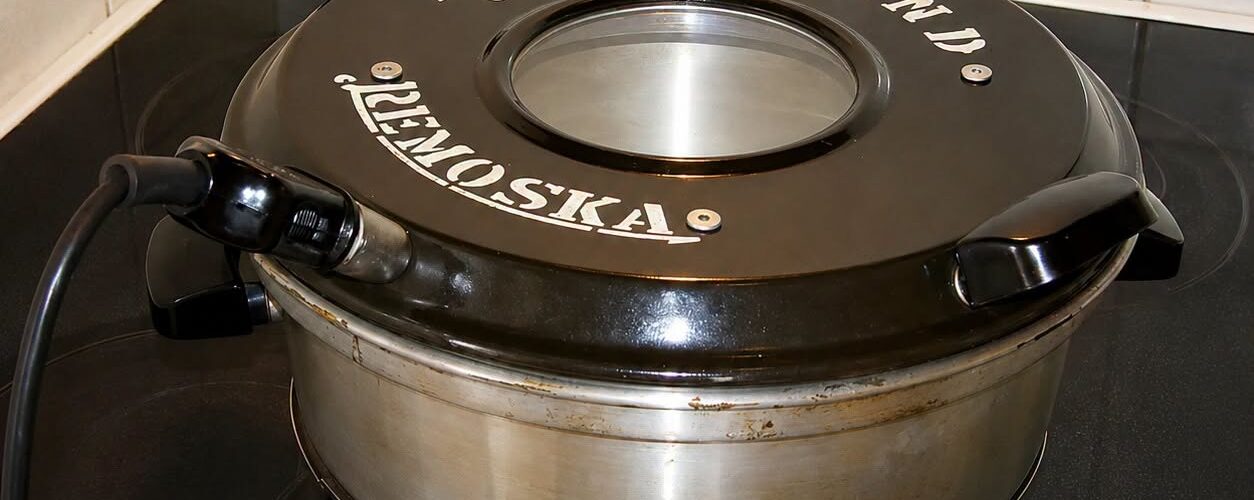
Unfortunately, I can’t see the picture, but this particular charm is an essential element of classic nostalgia posts!
Similar posts circulating on social media usually feature one of the following timeless retro household appliances:
Cast iron hand-held meat grinder (or poppy seed/nut mill): An indestructible piece that can be screwed to the edge of the table. It has no motor or gears that can burn out and lasts for generations.
Aluminum soda siphon or foam siphon: The era of brown and silver cartridges. Many claim that the consistency of the whipped cream or sparkling water made with it is nowhere near as good as that of today’s bottled products from the supermarket.
Szarvasi coffee maker: The good old “Kotyogó” (coffee maker), which, with its timeless seals and a simple physical principle, brewed its characteristically strong, thick black coffee.
Hajdu windshield washer and centrifuge: The machine that still works decades later in the summer house or garage. Hand broom with spring or rotary function: Simple mechanics that reliably performed their duties even during a power outage. Just describe what the device looked like (material, shape, function), and I’ll gladly tell you what kind of cult object it is!