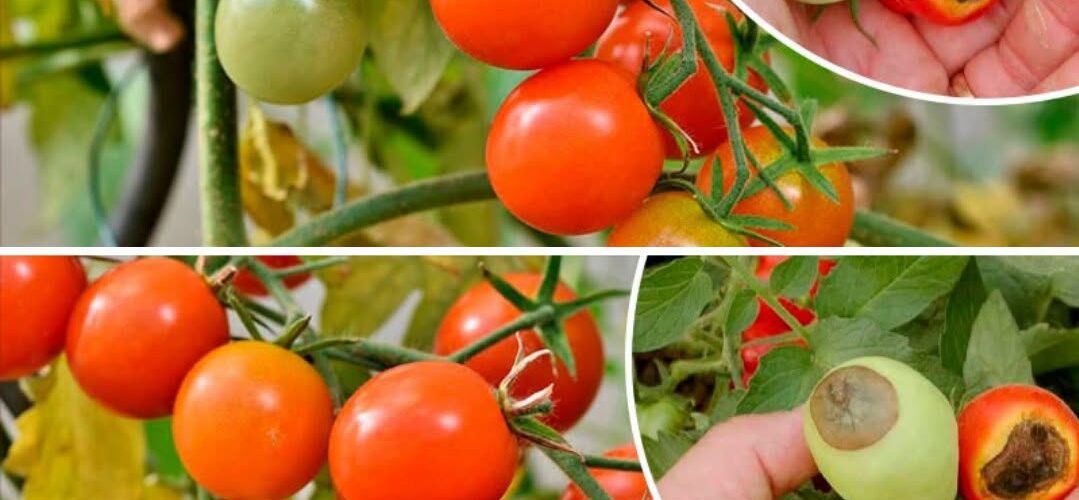
This is every home gardener’s nightmare: The tomatoes are growing beautifully, but suddenly they develop brown or deep black, sunken spots from the bottom up and begin to rot.
The most common mistake, or rather the underlying cause, is blossom-end rot.
The good news: It’s not a fungus or a virus, but a care mistake or nutrient deficiency that you can specifically correct.
The cause: Calcium deficiency
Blossom-end rot occurs because the plant lacks calcium. Calcium ensures stable cell walls in the fruit. If it’s lacking, the cells at the blossom end (the underside of the tomato) collapse, and the tissue dies and turns black.
The problem is usually not a lack of calcium in the soil, but rather watering habits: Calcium can only be transported by the plant via the water flow. Irregular watering disrupts nutrient transport, leading to malnutrition in the fruit.
How to secure your harvest (immediate measures & prevention)
- Water correctly and regularly (the key)
The mistake: Letting the soil dry out completely and then overwatering.
The solution: Keep the soil consistently moist. Ideally, water tomatoes in the morning directly at the base (never wet the leaves) and mulch the soil to prevent rapid evaporation.
- Calcium first aid
If your tomatoes are already showing signs of disease:
Cut off the affected tomatoes to prevent the plant from wasting energy on them.
Give the plant a fast-acting calcium fertilizer (e.g., dissolve a calcium effervescent tablet in the watering can or use a special fertilizer from a garden center).
- Prepare the soil for the future
When planting, mix crushed eggshells or seaweed lime into the soil.
Take care when fertilizing: Too much nitrogen or potassium blocks calcium uptake. Therefore, fertilize tomatoes with a balanced mix, ideally using a special tomato fertilizer.
Safety note: If the spots don’t appear on the underside of the fruit, but rather as brownish-gray spots on the leaves and stems, it’s late blight (a fungus). The only solution is to immediately remove affected foliage and protect the plants from rain (e.g., with a tomato shelter).
Do your tomatoes have spots directly on the underside of the fruit, or are the leaves also affected?