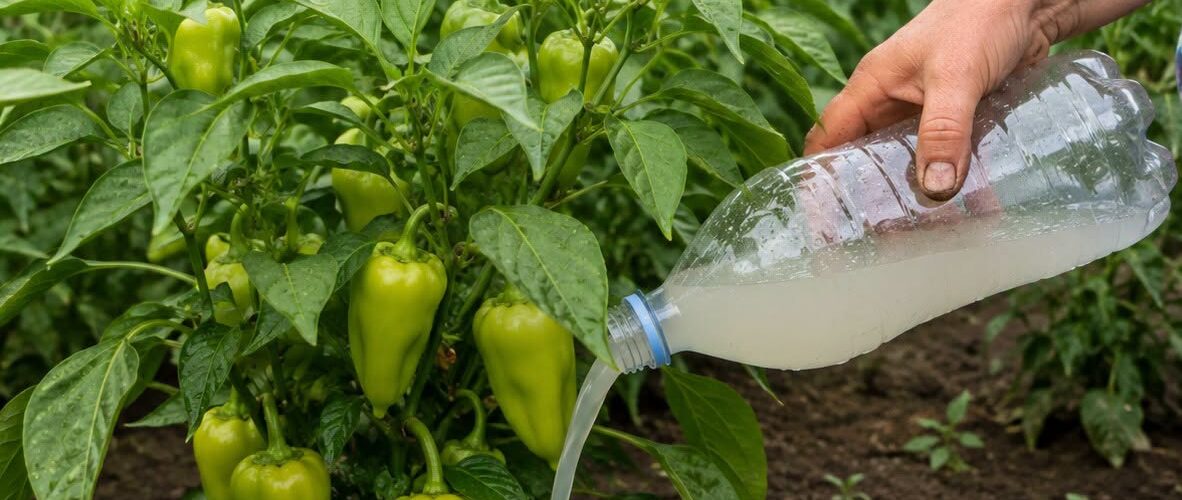
This sounds like one of those typical viral tips from the internet! While there’s a grain of truth to the tip, using it undiluted in the garden can quickly backfire.
Here’s a fact check on why milk is used for peppers, where the dangers lie, and how to do it right.
The truth: Why milk at all?
Peppers (just like tomatoes) need a lot of calcium for fruit development. If the plant lacks this nutrient, the dreaded blossom-end rot develops: The underside of the pepper gets brown, sunken spots and rots. Because milk is rich in calcium, the myth of milk fertilizer arose.
The dangers: Why pure milk is harmful in the garden
If you simply pour regular milk on your pepper plants, you’ll usually do more harm than good:
Odor & pests: Fat and protein decompose in the soil. It quickly turns rancid and attracts flies, fungus gnats, and rodents.
Root stagnation & mold: The fat clogs the soil pores. The roots no longer receive oxygen, water stagnates, and mold forms on the soil.
Poor absorption: Plants have great difficulty absorbing the calcium compounds from the milk through their roots.
If you’re going to use milk, do it RIGHT: The 1:10 spray solution
If you want to use milk as a natural aid, it’s excellent as a foliar fertilizer and protection against fungal diseases (such as powdery mildew):
Mixing: Mix 1 part fresh milk (preferably low-fat or raw milk/whey) with 10 parts water.
Spraying: On a cloudy day or in the morning, lightly spray the mixture onto the leaves of the peppers (do not pour it onto the soil).
Effect: The calcium can be absorbed directly through the leaf pores. The lactic acid bacteria also form a protective film against fungal spores.
Much better for a bountiful harvest (heavy feeder food)
Peppers are considered heavy feeders and need plenty of nutrients for a large harvest starting in August. Better and odorless alternatives are:
Crushed eggshells (€0): Finely ground eggshells into the planting hole or lightly worked into the soil. This is the cleanest and most effective source of calcium.
Coffee grounds (€0): A fantastic slow-release fertilizer that provides nitrogen and essential trace elements.
Nettle manure (€0): The best free organic fertilizer for strong growth and healthy leaves.
Organic tomato fertilizer: Contains the perfect ratio of nitrogen, phosphorus, and potassium for sweet, large fruit.