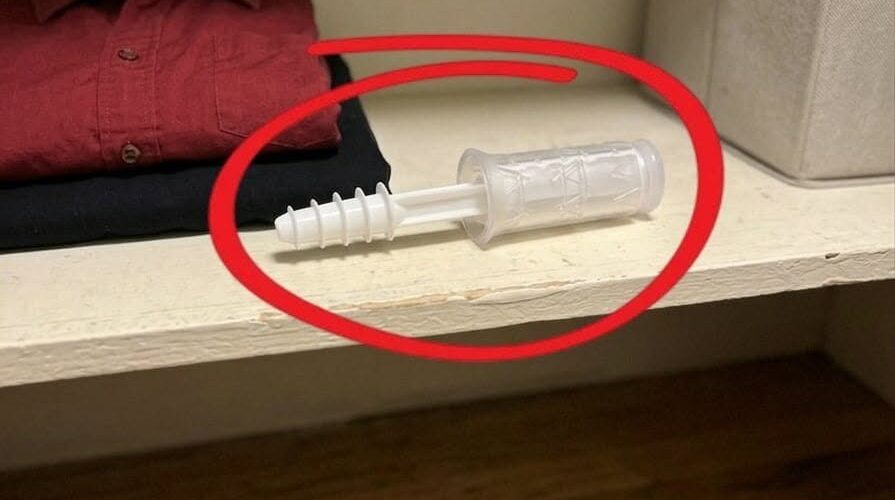
The Wardrobe Discovery: When an Unexpected Object Raises Questions About the Relationship
It’s an everyday situation with the potential for sudden drama: an ordinary reach for a jacket or a towel, a casual glance into the back corner of the wardrobe—and suddenly, there lies an object that doesn’t really belong there. Whether it’s a hidden gift, an unopened package, a mysterious box, or something entirely unexpected, the initial impulse is almost always a mix of curiosity, confusion, and emotional tension.
Stopping the Mental Movies
Before your mind starts playing out the wildest possible scenarios, it helps to take a step back. In moments of surprise, the brain tends to immediately fill in gaps of knowledge with speculation. Yet, reality is usually far less dramatic than one’s own fears.
Common reasons for finding hidden objects in daily life are often harmless:
Surprises and gifts: The wardrobe is a classic hiding spot for upcoming birthdays, anniversaries, or Christmas.
A need for privacy: Everyone has keepsakes, old diaries, or personal items that don’t necessarily need to be on display in the main living area.
Pragmatic storage: Sometimes there simply isn’t anywhere else to store things that are rarely used.
Handling the Discovery
What is the best way to react when you stumble upon something puzzling? Avoid jumping to conclusions: anger, disappointment, or accusations based on assumptions can cause lasting damage to trust.
Respect personal privacy: while a wardrobe is part of a shared household, it often provides the only personal space for storing one’s own clothes and belongings.
Seek an open conversation: if an item is causing unease, a calm, matter-of-fact discussion is the best approach. A direct yet non-confrontational question (e.g., “I was looking for X earlier and saw Y—what’s the story behind that?”) clears things up without casting blanket suspicion on the other person.
What exactly did you find in the wardrobe? If you share more details, I’d be happy to tailor the story or article more specifically to your situation!