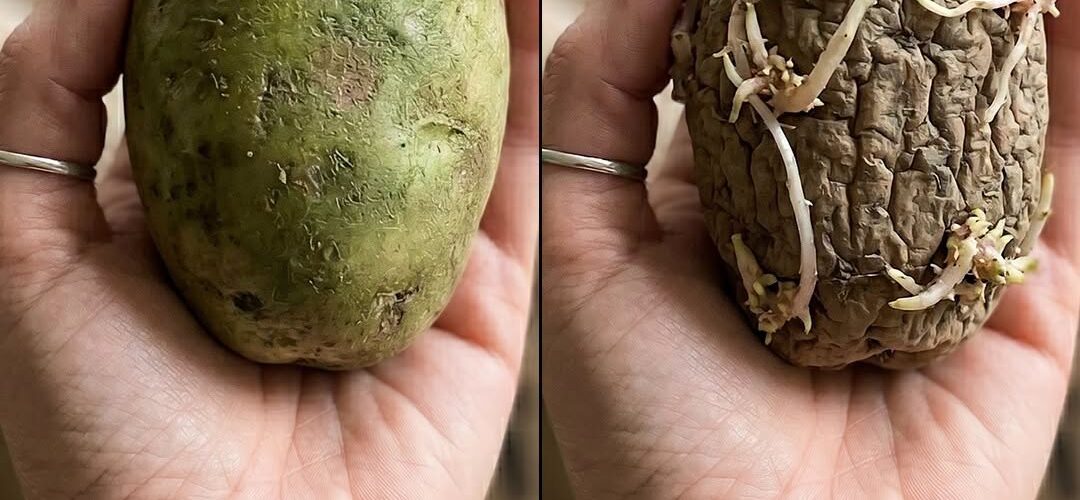
Potatoes are an absolute staple food – yet they are often completely underestimated or handled incorrectly. Here are the 7 most important facts everyone should know in the kitchen and in everyday life:
- Green spots & sprouts are toxic (Solanine)
When potatoes are exposed to light, they produce chlorophyll (they turn green) and simultaneously solanine – a natural neurotoxin that the plant uses to protect itself from predators.
What to do? Generously cut away small green spots and sprouts. If large parts of the potato are green or have sprouted excessively, it should be thrown away entirely. Solanine is not destroyed by cooking!
- Never store them in the refrigerator!
The ideal storage temperature is between 4 and 8 °C in a dark, dry place (e.g., in the cellar or a paper bag).
Why not refrigerate them? At temperatures below 4°C, enzymes convert the starch in potatoes into sugar much more quickly. The potatoes become sweet, mealy, and mushy, and when fried or roasted, dark, potentially carcinogenic acrylamides form rapidly.
- They have more vitamin C than oranges (per serving)
Potatoes are often mistakenly considered mere “carbohydrate bombs.” In reality, they are packed with micronutrients:
They provide plenty of vitamin C, potassium (important for the heart and muscles), and B vitamins.
A classic for a gentle diet: Because they are easily digestible and alkaline, they are excellent for soothing an irritated stomach.
- The “trick” for fewer calories: Resistant starch
If you let cooked potatoes cool in the refrigerator (e.g., for potato salad the next day), their chemical structure changes.
This creates so-called resistant starch. This cannot be broken down by the small intestine, serves as food for healthy gut bacteria, keeps blood sugar levels stable, and reduces the effectively absorbed calories by about 10–15%.
- Eat the peel? Only with young, organic potatoes!
Most nutrients and fiber are located directly under the peel. However, caution is advised:
Most of the pesticides (in conventionally grown potatoes) are also concentrated in the peel.
Rule: Only eat the thin peel of fresh new potatoes or young, organic potatoes. Always peel older or stored potatoes.
- Cooking type determines the dish
There is no single “best” potato – the amount of starch determines the result on the plate:
Firm-cooking (low starch): Remain whole. Ideal for potato salad, fried potatoes, and gratins.
All-purpose (medium starch): The all-rounder for boiled potatoes, jacket potatoes, or French fries.
Flourish (high starch): Fall apart easily. Perfect for mashed potatoes, dumplings, gnocchi, and soups.
- Don’t store them next to apples or onions.
Onions and potatoes often end up next to each other in the kitchen—a classic mistake:
Apples and onions release ethylene gas, which causes them to ripen.
If potatoes are stored next to them, they will sprout much faster, become soft, and spoil quickly.
Bonus cooking tip: Always start potatoes in cold, salted water and then bring them to a boil. This ensures they cook evenly from the outside in!