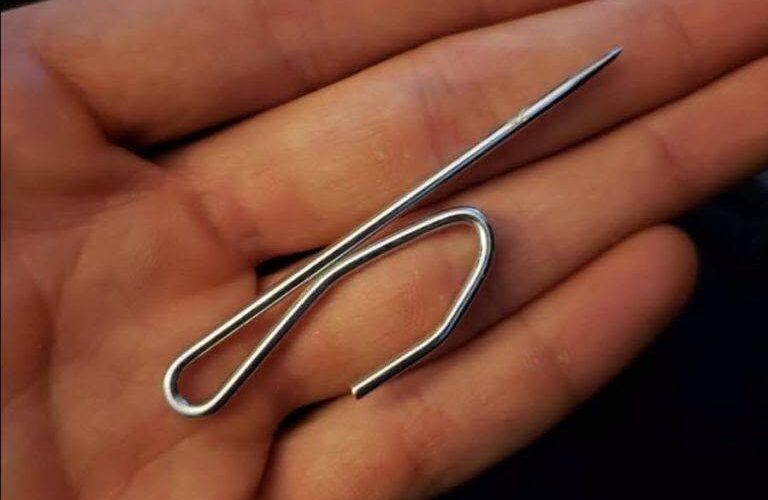
This sounds almost like the beginning of a good mystery novel or a classic urban legend!
In reality, however, strange finds or indentations/cutouts in record sleeves usually have a very pragmatic explanation rooted in music and manufacturing history. Here are the most likely causes for this “mysterious hook”:
- A “cut-out” / saw cut / punch (Very likely)
When record stores or record companies wanted to sell off leftover stock, overproduction, or unsellable albums cheaply (so-called “cut-out” stock or bargains), the sleeve was deliberately damaged. This was intended to prevent retailers from returning the records to the record company at full price.
“` Typical variations included:
A saw cut along the edge
A punched hole
A hook-shaped or V-shaped notch at the corner or opening of the sleeve
- The “paper clip” / inner sleeve clip
Sometimes, over the decades, an old paper clip imprint or a metal wire simply became etched or burned into the cardboard – especially if the previous owner had clipped lyrics, newspaper clippings, or receipts to the sleeve. - A hanger / stand mechanism (gimmick covers)
Especially in the 1960s and 70s, there were very creative cover designs:
Some albums had punch-out tabs or cardboard hooks so that the record sleeve could be hung on the wall like a picture.
Others had small hook mechanisms for inserts (such as posters, pop-up figures, or calendars).
Tip: If the hook is made of metal or plastic and was loose in the case, it could also be an old tool such as a tonearm lift hook, part of an antique cleaning brush, or the puller bearing of an old record player that the previous owner had parked there.