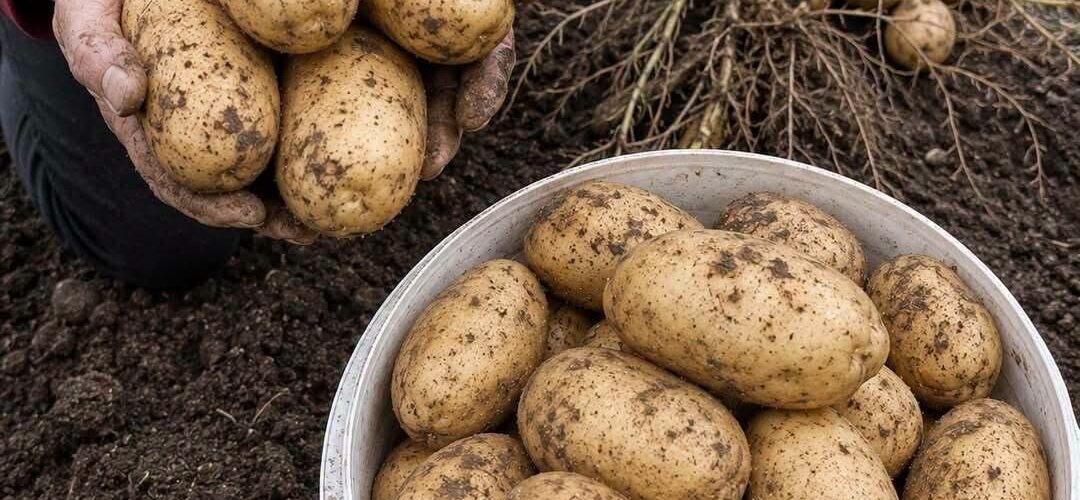
In practice, such statements refer to particularly robust, high-yielding, and weather-resistant potato varieties that reliably deliver good yields even under extreme drought, heat, persistent rain, or severe blight pressure.
Depending on the specific weather extremes of a season, experienced gardeners rely on different “crisis candidates”:
- In Heat & Drought (Drought-Resistant)
Bellarosa: An early-maturing, red-skinned variety. It is characterized by extremely high heat and drought tolerance and reliably produces large tubers even under nutrient and water scarcity.
Granola: A long-standing classic among predominantly firm-cooking varieties. It is considered exceptionally reliable in terms of yield, as it copes very well with fluctuating soil and weather conditions.
Baltic Rose: Very robust against summer heat, also highly resistant to potato virus Y and with good basic resistance to late blight.
- For damp weather & fungal pressure (late blight resistant)
Sarpo Mira: This mid-late variety has one of the strongest known resistances to late blight (Phytophthora infestans). Even in extremely wet summers, when other varieties succumb, its foliage remains green for a long time, ensuring a good harvest.
Otolia & Nixe: Modern organic varieties with excellent tolerance to fungal diseases and stable yields without chemical pesticides.
- The all-rounder
Gala: A very popular, early variety with uniform tuber formation. It has low soil requirements, needs little space, and produces reliable yields even in below-average growing seasons.
Laura: Red-skinned, firm-cooking, and very stable in yield. It is resistant to viruses and nematodes and also stores exceptionally well.
What makes a potato variety resilient:
Strong root system: Enables water absorption from deeper soil layers during droughts.
Genetic resistance: Protection against viruses, pests (such as nematodes), and late blight.
Suitable ripening time: Early varieties often complete their tuber growth before summer weakness or late blight pressure sets in.
Are you looking for a specific variety recommendation for your own garden or a solution to a particular challenge such as drought or late blight?