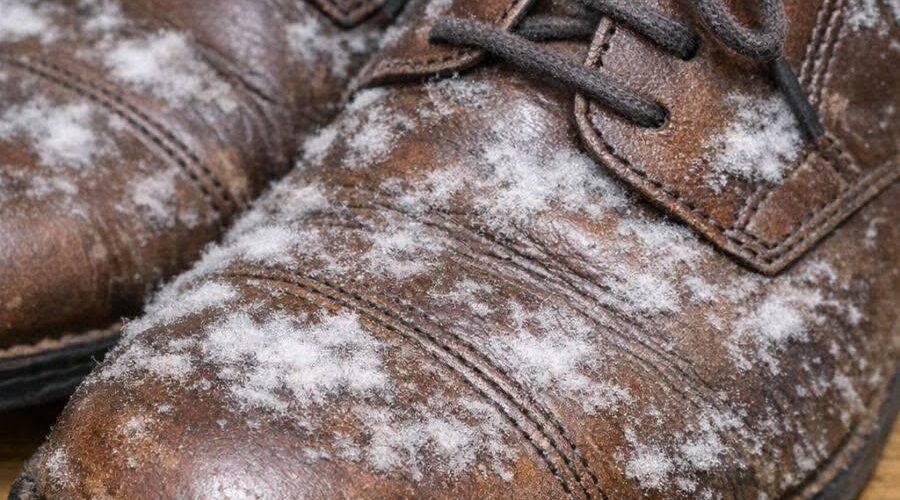
These white, furry patches are mold.
This often happens when leather clothing or shoes are stored for several months in a place with high humidity and poor air circulation (e.g. in a basement, cold closet, or attic). Leather is an organic material that absorbs moisture from the air, creating a breeding ground for mold.
Differentiating between mold and efflorescence: Mold vs. salt efflorescence
Sometimes mold is confused with salt efflorescence (residual road salt from last winter). You can easily tell the difference:
Mold: Hairy, fibrous, easily wiped/blown off, often moldy.
Salt bloom: Crunchy, crystalline, firmly embedded in the leather.
How to safely and thoroughly remove mold
It is best to wear a mask and gloves when cleaning to avoid inhaling the spores, and if possible, clean outdoors.
Dry brushing: Brush the mold thoroughly outdoors with a soft shoe or clothing brush.
Disinfection (destruction of mold):
Wet a cloth with a 1:1 mixture of vinegar and water or a special leather disinfectant.
Wipe the entire surface of the leather thoroughly. The acetic acid destroys mold spores and neutralizes musty odors.
Note: For very delicate suede materials (suede/nubuck), only lightly dampen the cloth, do not soak it.
Let it dry: Let your shoes dry completely at room temperature (don’t put them on a radiator, or the leather will become brittle).
Leather conditioning (Important!): Vinegar strips the natural oils from the leather. Once dry, be sure to apply a suitable shoe cream, leather lubricant or leather balm (use a suitable care spray for suede) to restore the material’s suppleness.
Here’s how to prevent mold next summer:
Never store wet shoes: Always clean your shoes thoroughly and let them dry completely before storing.
Store in a breathable way: Use cardboard shoe boxes or cotton bags – never plastic bags.
Add silica gel: Place small packets of silica gel or newspaper in the box to absorb any residual moisture.