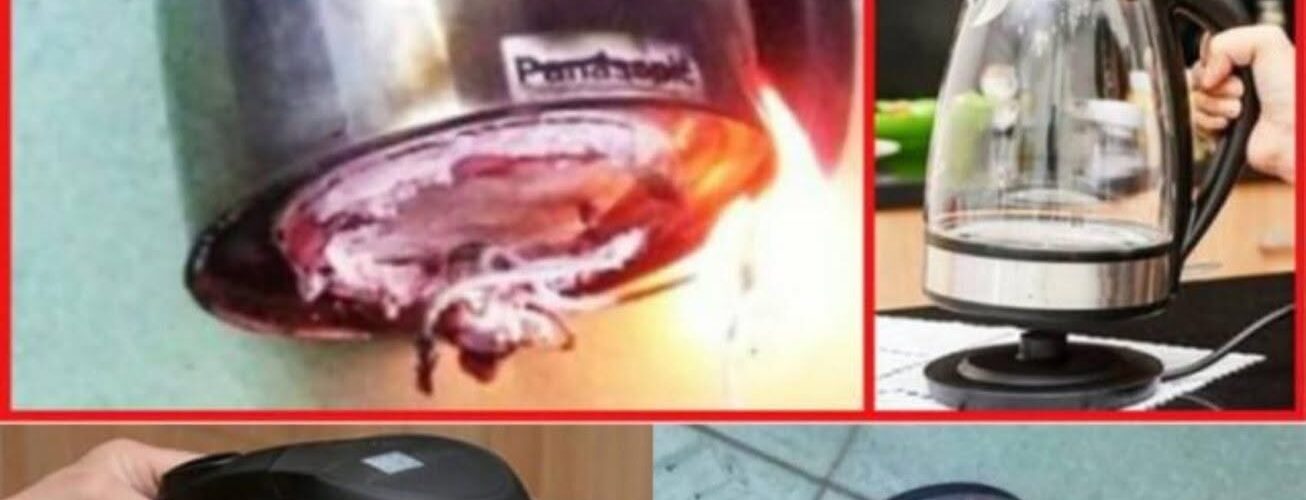
Kettles are among the most frequently used household appliances, yet they rarely receive attention during safety or hygiene checks. However, certain everyday, often careless, practices pose real risks to both health and the appliance itself.
The Most Dangerous Mistakes When Using Kettles
Repeatedly Boiling the Same Water
The Problem: While boiling water multiple times doesn’t change its chemical structure in the sense of making it “toxic,” the relative concentration of dissolved minerals (such as limescale) increases significantly due to evaporation. Furthermore, the water tastes stale and flat because the oxygen escapes.
Completely Ignoring Limescale Deposits
The Problem: A thick layer of limescale on the heating element acts like insulation. The heating coil overheats internally because heat can no longer be efficiently transferred to the water. This leads to premature wear and tear, increased energy consumption, and, in the worst-case scenario, a short circuit or a damaged thermal fuse.
The Problem: A thick layer of limescale on the heating element acts like insulation. The heating coil overheats internally because heat can no longer be efficiently transferred to the water. This results in premature wear and tear, increased energy consumption, and, in the worst case, a short circuit or a damaged thermal fuse.
“` Ignoring the minimum or maximum fill level
The problem: If the kettle is filled with too little water, the heating element runs dry and can burn out in a fraction of a second (fire hazard). If it is too full, the boiling water boils over, spills over the edge of the housing, and can get into the electrical base or the socket.
Using vinegar essence for descaling (if used incorrectly)
The problem: While vinegar is a great home remedy, boiling it undiluted or for too long in a closed kettle attacks aggressive rubber seals and plastic parts. Furthermore, irritating vinegar fumes can be released during boiling, which can irritate the respiratory tract. Better: Dilute the vinegar with water and do not boil vigorously, but simply let it soak.
Cleaning while plugged in or submerging the base
The problem: The base of the kettle with its contact elements must never be submerged in dishwater or cleaned under running water. Residual moisture in the plug contact can, in the worst case, lead to short circuits or electric shocks when the kettle is placed on the power socket.
Continue using plastic kettles containing plasticizers
The problem: Older, inexpensive plastic kettles can become porous over time or release harmful plasticizers and microplastics into the boiling water. Those who want to be on the safe side should opt for models made of stainless steel, glass, or BPA-free hard plastic.