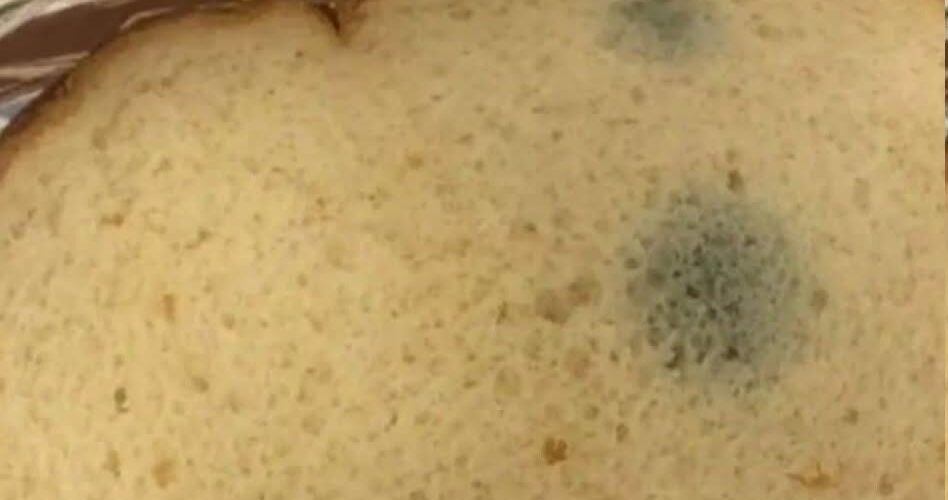
Dry bread is edible and safe to eat as long as no mold is visible and the bread smells neutral. Going stale is not spoilage, but a physical process (retrogradation) in which the starch in the bread releases moisture and the crust dries out.
Decision-making aid: Eat or throw away?
Criteria: Still edible
Discard (trash)
Appearance: Hard, dry, pale, or crumbly
White, green, gray, or black spots/veil
Smell: Neutral to typical bread/yeast
Musty, moldy, pungent, or chemical
Consistency: Firm to rock-hard
Greasy, moist and sticky, or unusually spongy
Why cutting away mold isn’t enough
As soon as even a small spot of mold is visible, the entire loaf or package must be discarded.
“` Bread has a spongy, porous structure. The visible network on the surface is only the fungus body – the invisible fungal threads (mycelium) and their harmful toxins (mycotoxins) permeate the interior long before they are visible. Toxins cannot be destroyed by heat (e.g., toasting or baking).
Reuse Ideas for Dry Bread
Refreshing: Lightly moisten the bread with water and bake it in the oven at 180°C (350°F) for 5–10 minutes.
Croutons: Cut bread into cubes and fry in a pan with a little olive oil, garlic, and herbs until golden brown.
Breadcrumbs: Grate completely dried-out bread or process it in a food processor and store it in an airtight container.
Classic ways to use up leftovers:
French toast (coated in an egg and milk mixture and fried)
Bread dumplings or bread soup
Panzanella (Italian bread salad with tomatoes and olive oil)