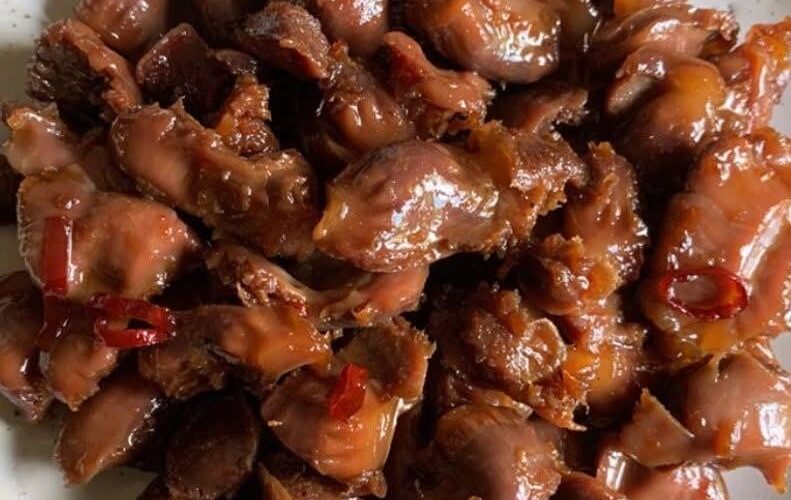
Chicken gizzards (also known as chicken stomachs) are among the most overlooked, yet affordable, superfoods in Hungarian cuisine. Here are the key culinary and nutritional facts that are rarely mentioned:
You don’t have to cook them for hours – the secret to tender chicken gizzards
Chicken gizzards are a very firm muscular organ, so they can take up to 1.5–2 hours to become completely tender when steamed traditionally. However, the process can be significantly sped up:
In a pressure cooker: You’ll achieve a buttery-soft consistency in just 25–30 minutes.
The baking soda trick: Soak the cleaned chicken gizzard in a teaspoon of baking soda for 15–20 minutes before cooking (and then rinse it thoroughly). This loosens the fibers and cuts the cooking time in half.
Soaking/Marinating: A marinade of tomatoes, wine, or vinegar in the cooking liquid also helps to break down the tough connective tissue.
You (usually) don’t have to bother with cleaning. Chicken gizzards from stores and butchers are ready to cook in 95% of cases: The inner, yellowish membrane and the stones inside are removed during processing.
An interesting fact from folk medicine: In the past, the inner, yellow membrane (tunica) of the chicken gizzard wasn’t thrown away. It was dried, ground into a fine powder, and consumed as a natural digestive aid and remedy for indigestion, as it is very rich in digestive enzymes.
You don’t need to spend money on collagen supplements.
Chicken gizzards are a low-calorie but extremely nutrient-dense offal product:
A natural collagen powerhouse: The connective tissue it contains becomes gelatinous during slow cooking, which is excellent for the health of joints, skin, and gut flora.
Low-calorie protein: 100 grams of stomach contain about 20 grams of pure protein, while the fat content is negligible (approx. 2–3 g).
Rich in iron and vitamin B12: As an excellent blood-building agent, the organic iron it contains is absorbed by the body much better than iron from plant sources.
What can you prepare with it?
Besides the classic stew, it’s perfect for rich broths, but it’s also excellent in Asian stir-fries with vegetables or as a topping for warm salads when grilled or fried.