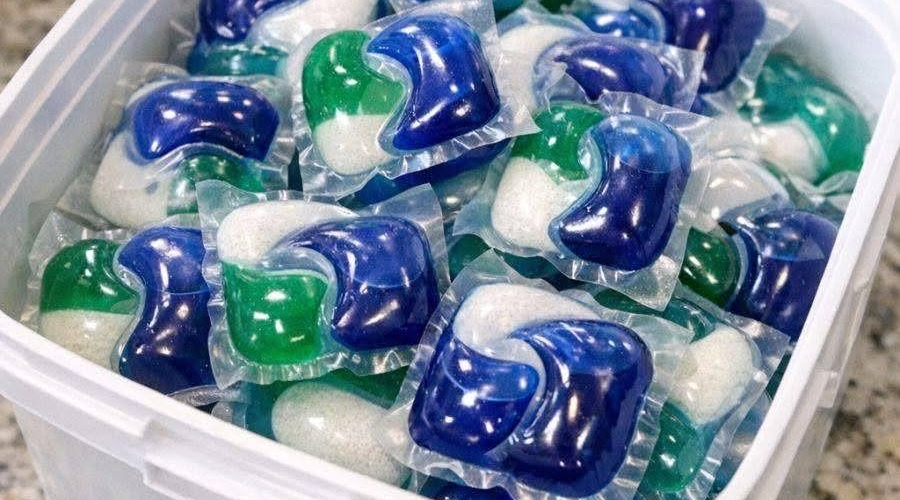
Dishwasher capsules (or dishwasher capsules) owe their enormous cleaning power to a combination of highly effective degreasers, bleach and enzymes. Thanks to this, they are an absolute miracle in the home, far beyond the limits of the dishwasher.
Descaling/cleaning of thermoses and coffee machines
Procedure: Place the capsule in a kettle, pour boiling water over it and let it infuse for 15-30 minutes.
Result: Even burnt-on coffee and tea stains dissolve completely without scrubbing.
Removing burnt-on food residues from ovens and baking trays
Procedure: Grind the capsule into a paste in a little warm water or soak a clogged baking sheet overnight in hot water with the dissolved capsule.
Result: The layers of grease and soot soften completely and can be easily wiped off.
Cleaning a fat fryer or a hot air fryer
Procedure: Fill a basket or container with hot water, add the tablet to the dishwasher and let it work for 20 minutes.
Result: Thick, sticky fat is completely dissolved.
Discharge or foul-smelling discharge
Procedure: Place the tablet in the dishwasher directly above the drain and slowly pour boiling water over it from the kettle.
Result: The deposits of fat and soap foam in the siphon are decomposed and unpleasant odors disappear.
Deep cleaning of the toilet
Procedure: Throw the tablet in the dishwasher directly into the toilet bowl and let it work for at least 30 to 60 minutes (or overnight). Then scrub with a toilet brush and rinse.
Result: Removes stubborn scale, urine scale and discoloration in the drain pipe.
Refreshing white laundry and removing stains
Procedure: Add one tablet to a regular detergent in a drum for white towels, bed linen or socks at a temperature of 60°C.
The result: The bleach and enzymes in the tablet remove gray stains as well as stubborn stains from sweat or grease. (Note: Use only on pure white laundry.)
Disinfect the trash can thoroughly
Procedure: Fill an empty plastic trash can with hot water, dissolve one tablet and let it work for 30 minutes. Then rinse.
Result: Neutralizes lingering odors and removes sticky residue from the bottom of the bin.
Brightening up white sneakers and sneaker soles
Method: Mix the crushed tablet with a little warm water to make a thick paste. Apply it to the yellowed rubber soles with an old toothbrush, leave it on for a short time and then wipe it off with a damp cloth.
Result: The edges will be bright white again.
Refreshing plastic garden furniture
Procedure: Dissolve one tablet in a bucket of warm water and wash plastic chairs or tables with a sponge.
Result: Removes bird droppings, pollen and stubborn dirt caused by the weather.
Salvage of burnt pots and pans
Procedure: Add a little water to the affected pot, put the tablet in it and bring it to a boil on the stove. Turn off the heat and let it stand for 15 minutes.
Result: The burnt layer separates from the bottom of the pot. (Do not use on Teflon-coated surfaces.