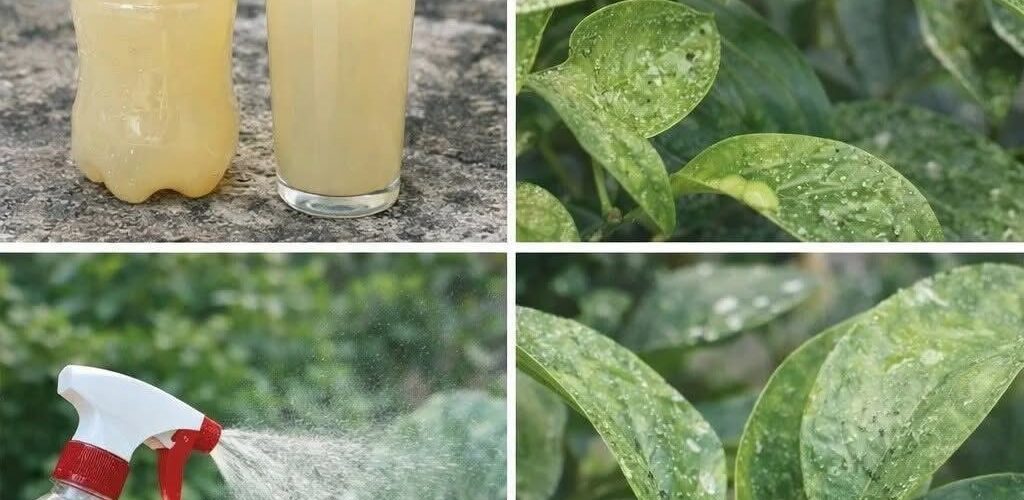
The symbiosis between ants and aphids is one of the most common and enduring in vegetable or flower gardens: The ants “guard” and protect the aphids from predators, and in return, they receive the sweet honeydew they secrete.
To break this alliance without synthetic chemical pesticides, it is important to tackle two fronts simultaneously: controlling aphids and blocking ants’ access.
Aphid Control (Direct Attack)
Blue-White Soap (or Castile Soap):
Mixture: Dilute 1 to 2 tablespoons of grated soap in one liter of warm water.
Application: Spray directly on infested leaves (especially the underside) in the late afternoon. Soap destroys the protective layer of aphids and dries them out without harming the plant.
Garlic and chili extract:
Mixture: Crush 3 cloves of garlic with 1 chili pepper and 1 liter of water. Strain well and add a few drops of dishwashing detergent.
Application: Acts as a powerful, natural repellent and contact insecticide.
Strong stream of water:
For the first infestation of resistant plants, simply spray the stem and underside of the leaves with a strong stream of water to remove most of the aphids.
Ant control (access control):
Adhesive barriers:
Apply double-sided tape or tree/trunk glue to the base of taller plants or the trunk of fruit trees. This will prevent ants from climbing up and feeding on the aphids.
Natural soil repellents:
Coffee grounds: Sprinkle around the stems of plants. In addition to improving the soil, the strong scent repels ants.
Cinnamon powder or cloves: Place a ring of cinnamon around the base of the plant or in the flowerpot; ants avoid cinnamon barriers because of the strong scent.
Lemon juice: Spray lemon juice along the paths that ants usually use.
Encourage natural predators (long-term solution): Ladybugs and goldworms (Chrysoperla carnea): A single ladybug can eat dozens of aphids a day. Companion plants: Plant marigolds, coriander, fennel, or basil near vulnerable plant species to attract these beneficial insects and naturally repel pests.