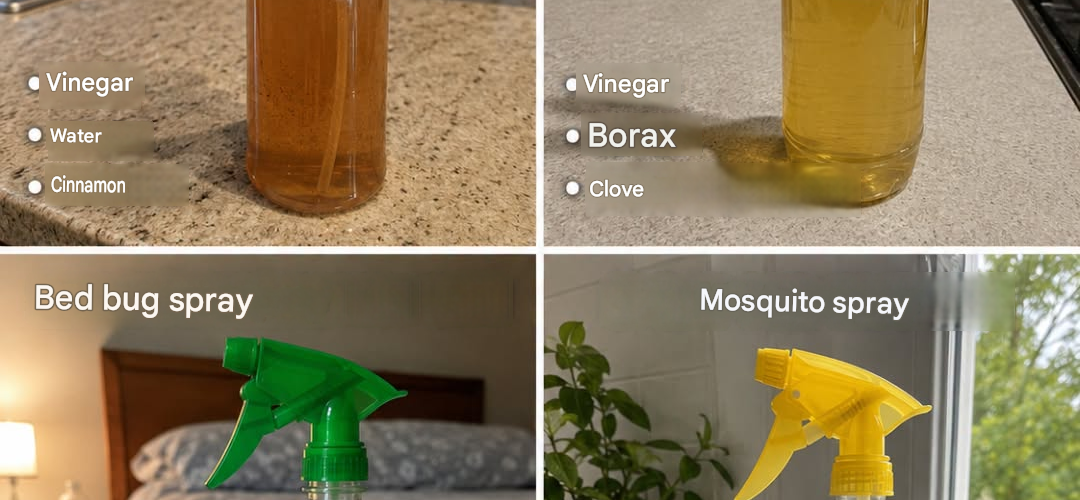
That’s a great approach! It really doesn’t always have to be harsh chemicals. Many home remedies are not only more environmentally friendly and cheaper, but also safer for pets and children.
Here are a few tried-and-tested, natural methods against these three pests:
🐜 Ants: Confuse their sense of smell
Ants navigate by scent trails. If you disturb these, they usually disappear quickly.
Cinnamon, cloves, or lavender: Sprinkle ground cinnamon or place dried cloves on the ant trail. The intense scent will disorient them.
Vinegar: Wipe the affected surfaces with a mixture of water and vinegar. This completely neutralizes the ants’ scent.
Chalk: Draw a thick line of chalk in front of the entrance doors or windows. Ants avoid the alkaline talc on their feet and often don’t cross the line.
🦟 Mosquitoes: Build up scent barriers
Mosquitoes are attracted to our body odor and CO₂. Certain essential oils mask this effect.
Plant power: Place tomato plants, catnip, basil, or scented geraniums on the windowsill. Mosquitoes hate this smell.
Essential oils: A few drops of lemon eucalyptus, clove, or citronella oil in an oil burner work wonders.
Avoid standing water: The best protection is prevention. Empty saucers from flowerpots and cover rain barrels so mosquitoes can’t lay eggs there.
🪳 Cockroaches: Prevention and targeted action
Cockroaches are more persistent, but you can still fight them. Important: In case of a severe infestation, a professional should be called in, as they can transmit diseases.
Baking soda and sugar: Mix equal parts baking powder (or baking soda) and sugar. The sugar attracts them, while the baking soda is lethal in their stomachs.
Bay leaves: Cockroaches detest the smell of bay leaves. Crushed leaves placed in corners and crevices can drive them away.
Dehumidify: Cockroaches thrive in damp environments. Fix leaking pipes and wipe sinks dry at night.
Are you currently battling a specific infestation, or are you simply gathering tips for the summer?