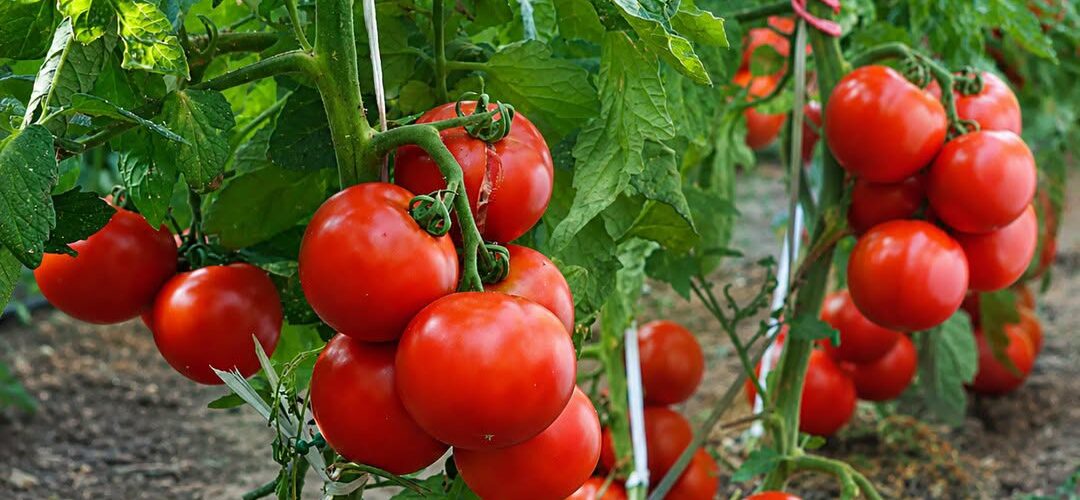
July is a crucial month for tomatoes. Now it’s decided whether you’ll harvest just a few wilted fruits or experience a veritable tomato deluge. The plants are in their flowering phase, producing fruit, and simultaneously consuming a tremendous amount of energy.
If you want to get the most out of each plant and easily double your harvest, you should definitely follow these 5 steps in July:
Completely remove the leaf stalks (petioles)
Tomatoes grow particularly vigorously in July and form new shoots in the leaf axils (so-called petioles). The plant invests a lot of energy in these, which impairs fruit formation and ripening.
Here’s how: Go through all the plants at least once a week (especially the taller ones) and remove all the leaves.
Here’s how: It’s best to break off the leaves with your fingers in the morning when the plant is strong. The wound heals by evening, and the risk of infection is minimized.
Radical defoliation from the bottom (powdery mildew prevention): Leaves that touch the ground or lie just above it are the entry point for the dreaded potato powdery mildew. They also shade the lower fruits and impede air circulation.
Here’s how: Gradually remove all leaves from the ground up to the first flower or fruit cluster.
Rule: Never remove more than 2-3 leaves at a time from a plant to avoid damaging it. The plant needs to be ventilated from below.
Fertilizing with potassium and phosphorus: Avoid nitrogen-rich fertilizers (e.g., pure chicken manure or nettle tea) in July. While nitrogen promotes leaf growth, you need fruit now.
What tomatoes need: Potassium (for sweetness and fruit size) and phosphorus (for a strong root system and ripening).
Home remedy tip without chemicals: An infusion of wood ash (rich in potassium and calcium) is excellent. Simply add one cup of pure wood ash to 10 liters of water, let it steep, and then water the roots with it. Comfrey infusion is also very effective.
⚠️ Beware of dry rot: If the tips of your tomatoes turn black, they are lacking calcium. Often, however, this is not due to a calcium deficiency in the soil, but rather to irregular watering, which prevents the plant from absorbing the calcium.
Watering correctly – less frequently, but thoroughly
The July heat tempts you to spray your tomatoes with a little water every evening. This is a fundamental mistake. The roots then remain just below the surface, and the plant dries out easily.
Here’s how to do it right: Water your tomatoes 2 to 3 times a week, but generously (5–10 liters of water per plant), ideally early in the morning. The water must penetrate deep into the soil.
The July heat makes you want to water your tomatoes thoroughly every evening. The golden rule: Always water directly at the roots, never on the leaves! A wet leaf in the July heat is an ideal breeding ground for mold and increases the risk of sunburn.
Mulching: Retaining moisture in the soil
If you haven’t mulched your beds yet, July is the perfect time to do so. The sun can heat the soil so intensely that the water evaporates within just a few hours.
What to use: Spread a layer of grass clippings, straw, or wood chips (about 5–8 cm) around the stems.
Result: Mulch keeps the soil moist, stabilizes its temperature, and prevents weed growth. Furthermore, when watering, water droplets aren’t reflected from the soil onto the lower leaves, which provides additional protection against disease.
Which of these tips do you regularly use with your tomatoes, and which will you try for the first time this July?