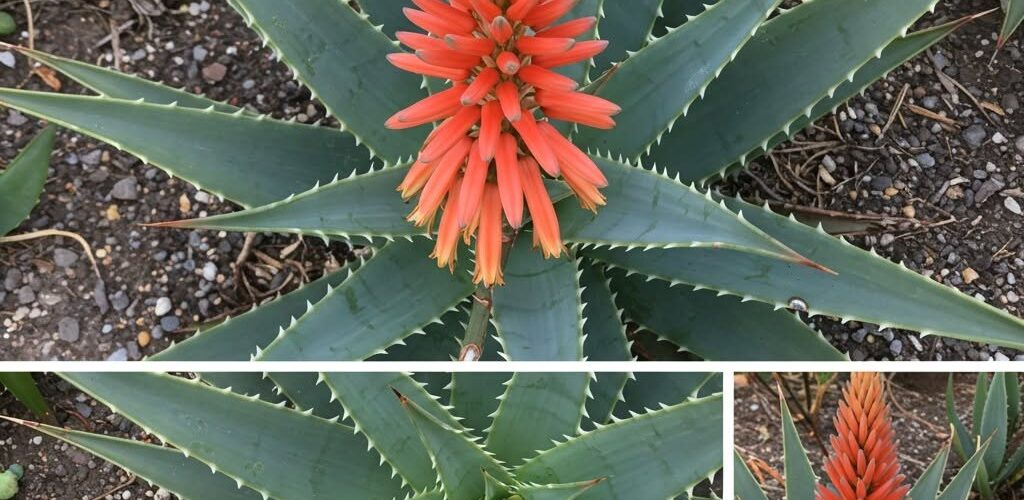
We cultivate Aloe vera (and other aloe species) primarily for its healing gel or decorative leaves. Flowering an aloe indoors is rather rare, but not impossible. If your aloe isn’t blooming, it’s usually due to a combination of age and unsuitable conditions.
Here are the main reasons why aloe isn’t blooming and how you can encourage flowering.
The plant is too young
Aloe doesn’t bloom in its first few years. It needs to reach sexual maturity.
Cause: The plant is younger than 4 to 5 years old.
Solution: Patience. With proper care, the aloe simply needs to wait until it’s fully grown.
Lack of light
This is the most common problem when growing aloe indoors. Aloe originates from the semi-deserts and arid regions of Africa, where it’s accustomed to full sun.
Cause: The plant is in partial shade, by a north-facing window, or too far back in the room.
Solution: Place it by a south- or west-facing window. Ideally, the aloe should flower from late spring to autumn – so place it outside on a balcony or in the garden (but gradually acclimate it to direct sunlight to prevent the leaves from burning).
Lack of winter dormancy
For the aloe to flower, it needs a natural cycle of the seasons – including winter dormancy. If it receives the same warmth and amount of water in winter as in summer, it will not flower.
Cause: Year-round cultivation at room temperature (22–25 °C) and constant watering.
Solution: Give the aloe a winter dormancy from November to February. Place the plant in a cooler room (ideally 10–15 °C) and drastically reduce watering (about once a month is sufficient). This cold stimulus encourages the formation of flower buds.
Too Large a Pot and Too Much Water
Aloe flowers more frequently when it feels somewhat “stressed” and has to fight for survival (which stimulates reproduction—that is, flowering).
Cause: The plant is in a pot that is too large and is putting all its energy into root growth, or it is being overwatered and is at risk of rot.
Solution: Repot the plant into a pot that is only slightly larger than the root ball. Use a sandy, well-draining potting mix (for cacti and succulents). Allow the potting mix to dry out completely between waterings.
Insufficient Fertilization
Cause: Too much nitrogen. If you fertilize your aloe with conventional houseplant fertilizer, the nitrogen will promote the growth of large, green leaves, but it will prevent flowering.
Solution: If you wish to fertilize at all (aloe is not demanding when it comes to nutrients), use only a cactus and succulent fertilizer with a high potassium and phosphorus content, and fertilize only in spring and summer (approximately every three weeks).
Summary for successful flowering: If you want your aloe to flower, let it bask in the sun during the summer (ideally outdoors) and rest in a cool, dry place during the winter.
How old is your aloe, and what are the current growing conditions?