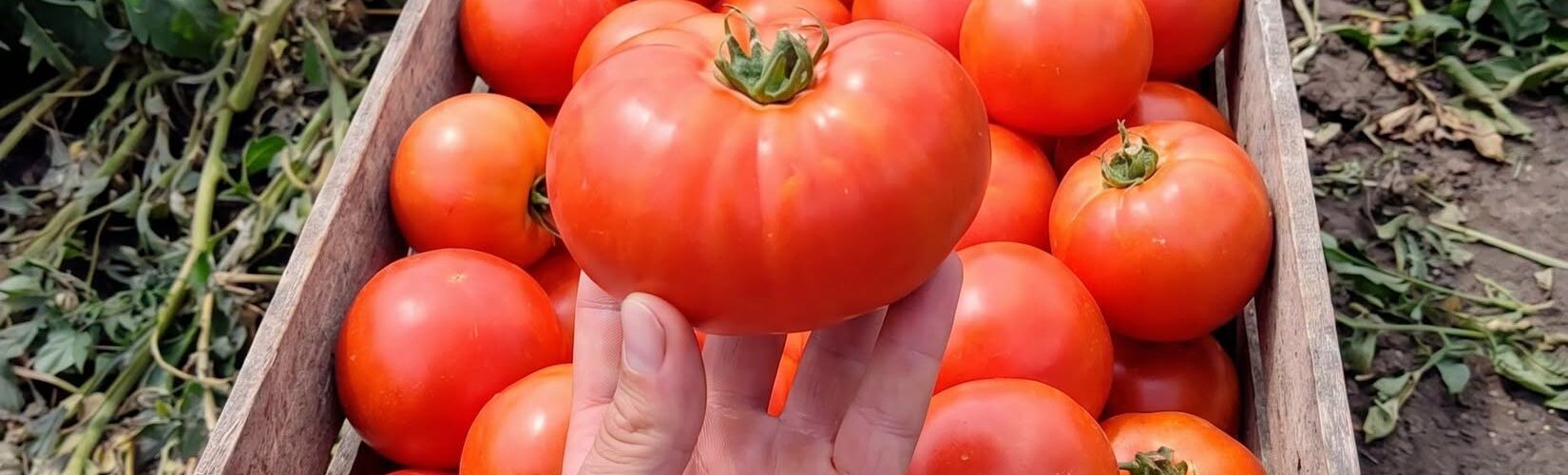
For a bountiful and flavorful tomato harvest in your own garden or on your balcony, a few crucial tips are essential. Tomatoes are hungry sun worshippers, but with the right techniques, they’ll reward you with baskets full of red, juicy fruit.
Here are the 9 most important rules every tomato grower should keep in mind:
- Plant Deeply for a Strong Foundation
Tomatoes have the ingenious ability to form roots along their entire stem (so-called adventitious roots). When planting out the seedlings, plant them so deep that the lower leaves are just above the soil (pin off the lower leaves beforehand).
The effect: More roots mean better water and nutrient uptake and an extremely sturdy plant.
- Sun is the Fuel
Tomatoes need at least 6 to 8 hours of full sun a day. Too much shade leads to leggy growth, fewer blossoms, and watery, flavorless fruit. The sugar inside the tomato is only formed when sunlight hits the leaves. - Consistently prune (fruit before leaves)
New side shoots (suckers) constantly form in the leaf axils. Regularly pinch these off with your fingers. If you let them grow, the plant puts all its energy into lush green foliage instead of ripening fruit.
(Exception: Bush tomatoes don’t need pruning!)
- Water from below – never from above
Tomatoes hate wet leaves. Moisture on the foliage is the number one invitation for the dreaded blight fungus. Always water directly at the base of the plant, onto the soil. A watering ring or a terracotta pot buried next to the plant helps direct the water to the roots. - Keep consistently moist, don’t overwater
Tomatoes react badly to constant changes between bone-dry and soaking wet conditions. If the fruit is suddenly flooded with water after a dry spell, the inside expands faster than the skin – the tomatoes burst. - Feed them properly (tomatoes are heavy feeders)
Tomatoes are voracious eaters. Mix plenty of compost or horn shavings into the soil when planting. As soon as the first small green tomatoes appear, the plant needs regular feedings. Use a potassium-rich organic tomato fertilizer or homemade nettle manure. Too much nitrogen, by the way, leads to huge leaves but hardly any fruit. - Airflow protects against fungi
Never plant tomatoes too close together. They need space so that the wind can blow through the rows after rain. The faster the leaves dry, the lower the risk of disease. A planting distance of at least 60 to 80 cm is ideal. - Support early
Tomatoes become heavy. Tie indeterminate tomato plants to spiral stakes, wooden poles, or string early on. Don’t wait until the plant collapses under the weight of the first fruit clusters or lies on damp soil where slugs and fungi lurk. - Mulching keeps the soil healthy
Cover the soil around the tomato plant with a layer of grass clippings, straw, or leaves. This mulch layer protects the soil from drying out, retains moisture evenly, and prevents soil (and thus potential fungal spores) from splashing onto the lower leaves when watering.