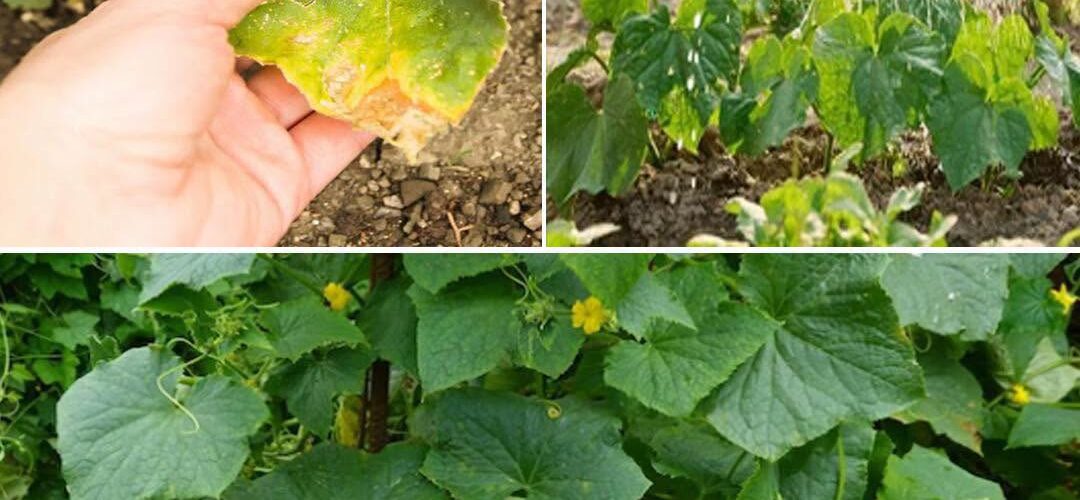
Fertilizing correctly: The key to a bountiful harvest without yellow leaves
Cucumbers are very nutrient-demanding plants. They have a shallow root system but simultaneously produce a large quantity of leaves and fruit, which means they consume a lot of nutrients. Nutrient deficiencies manifest as yellow leaves and stunted growth.
To avoid this, you should divide fertilization into phases, depending on what the plant currently needs.
Yellow leaves: How to recognize the warning signs?
Before you reach for the fertilizer, pay attention to the signs of yellowing leaves:
Older, lower leaves turn yellow (at the edges and between the veins): Typical nitrogen (N) or magnesium (Mg) deficiency. The plant draws nutrients into new shoots, and the old ones die off.
Young, upper leaves turn yellow: This can indicate an iron or trace element deficiency, often caused by a soil pH that is too low or waterlogging (the roots cannot function properly).
Yellow spots (mosaic spots) or mold: Be careful, this is not a sign of nutrient deficiency, but a disease (e.g., cucumber mold). Fertilizer alone will not help; disease control is necessary.
Step-by-step fertilization plan
Phase: Growth of green mass (from planting to flowering)
In this phase, the cucumber develops a strong stem and leaves. It primarily needs nitrogen.
What to fertilize with: Fertilized chicken manure (from the chicken coop) or cow manure worked into the soil is ideal. If using commercial fertilizers, choose those with a higher nitrogen content (e.g., Kristalon Start).
Frequency: Every 7–10 days.
Phase: Flowering and Fruit Set (Main Season)
As soon as the first blossoms appear, you should stop fertilizing with nitrogen. Too much nitrogen at this stage leads to huge leaves but no cucumber formation. The plant now needs potassium (K) for fruit development and phosphorus (P) for strong root growth.
Fertilizer: Kristalon fruit and flower fertilizer, organic fertilizer for fruiting vegetables, or homemade comfrey infusion (comfrey is rich in potassium).
Frequency: Once a week when watering.
Home remedies for yellowing:
Wood ash (source of potassium and calcium): Sprinkle a handful of ash around the stem and lightly work it into the soil, or soak it in water. It helps against yellowing due to potassium deficiency and reduces the soil’s acidity.
Epsom salt: If the leaves are yellowing between the veins, they are deficient in magnesium. Dissolve 1 tablespoon of Epsom salt in 5 liters of water and spray the leaves directly (foliar fertilization is the fastest method). Avoid rain or direct sunlight for one hour after application.
Golden Rules for Watering and Fertilizing
Never fertilize dry soil: Always water cucumbers with plain water first, then add liquid fertilizer. Otherwise, the roots risk burning.
Warm water is important: Cucumbers don’t tolerate the shock of cold well water. Use water that has been left to stand and warmed by the sun.
Mulch: Cover the soil around the cucumbers with cut grass or straw. This retains moisture and a consistent temperature, and the grass releases a gentle dose of nitrogen as it decomposes.
Are you growing your cucumbers in a greenhouse or outdoors in a flower bed? Ventilation and watering requirements will differ depending on the location.