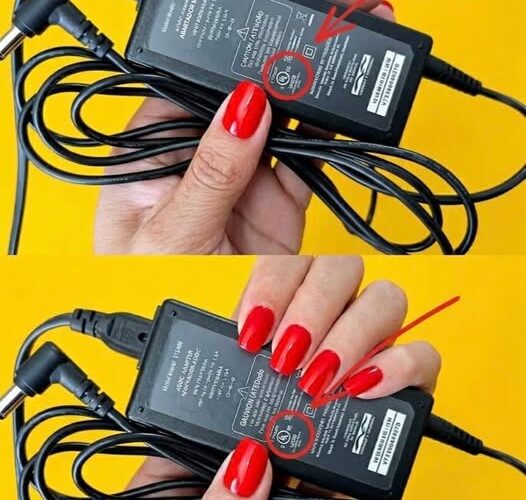
You have stumbled onto another classic internet teaser headline. This one is usually trying to hype up a completely normal, boring piece of engineering as if it is a “secret life hack.”
Ninety percent of the time, these articles are talking about that mysterious little plastic cylinder molded near the end of your laptop charging cable.
It is called a ferrite bead (or ferrite choke), and while it is not a hidden button or a secret compartments, it does have a very important, passive function.
What Does the Ferrite Bead Do?
Inside that plastic lump is a simple cylinder of ferrite, which is a magnetic chemical compound made of iron oxide mixed with other metals.
Your laptop’s internal components run at high speeds, which turns the entire charging cable into a giant, accidental antenna. This “antenna” can broadcast high-frequency electromagnetic interference (EMI) into the air, or pull it in from nearby electronics.
The ferrite bead acts as an electronic filter:
- It lets the normal low-frequency power flow smoothly to your laptop.
- It catches the high-frequency “noise” (interference) and safely converts it into a tiny, unnoticeable amount of heat.
Without that little cylinder, your laptop charger might cause your home Wi-Fi to drop, make your speakers buzz, or make your TV screen flicker whenever it is plugged in nearby.
Other “Hidden” Charger Features
If the article wasn’t talking about the ferrite bead, it was likely overhyping one of these other standard design elements:
- The Removable “Duckhead” Plug: On Apple MacBooks and some other premium chargers, the actual wall prong block slides completely off. This isn’t a secret; it is designed so you can swap out the regional plug when traveling internationally, or attach an extension cord.
- The Built-In Wings/Hooks: Older charging bricks featured pop-out plastic wings. Their “hidden function” was simply cable management—allowing you to wrap the thin cord neatly around them so it wouldn’t tangle in your bag.
- The Tiny LED Light: The light on the tip of some connectors changes color (e.g., orange to green) not just to look cool, but to tell you the charging state without you having to open the laptop lid to check the screen.
So, while it is a vital piece of engineering that keeps your home