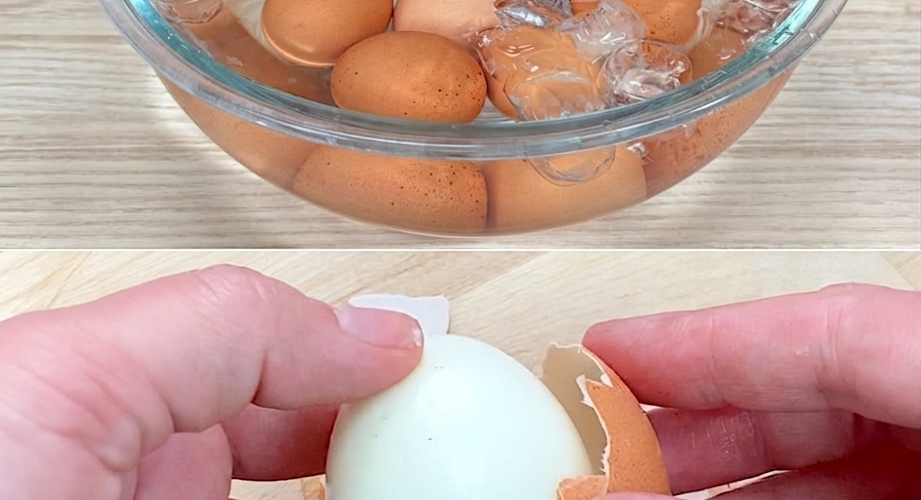
Peeling hard-boiled eggs can sometimes be a chore, especially when the egg white tears and sticks to the shell. The key to success lies not only in the peeling itself, but also in the proper preparation and cooling of the eggs.
Here’s a tried-and-true method for peeling eggs perfectly clean and undamaged:
Shock Bath (The Most Important Step)
As soon as the cooking time is up, remove the eggs immediately and place them in a bowl of ice water with ice cubes (or hold them under a strong stream of ice-cold water).
Why it Works: The sudden temperature change causes the egg contents to shrink slightly and detach from the inner membrane. Leave the eggs in the ice bath for at least 5 to 10 minutes.
Proper Peeling Technique
Once the eggs are completely cool, use one of these tricks:
Rolling Method: Gently tap the egg on a ruler to crack the shell. Then, roll it across the table with the palm of your hand, applying light pressure. The shell will crack into small wrinkles and peel off almost effortlessly.
Peeling Under Water: Peel the egg either in a bowl of water or under a gentle stream of water. The water penetrates the membrane and makes peeling the shell easier.
Start at the wider end: There’s always an air bubble there. Begin peeling there, as the membrane is easier to grasp.
💡 Important Tip: Always try to get your fingers under the thin white membrane between the shell and the egg white. When you peel off the membrane, the shell will come off automatically, and the egg white will remain intact.
Additional Tips: What else helps?
… Use older eggs: Fresh farm-fresh eggs are the hardest to peel because their low pH causes the egg white to stick to the shell. Eggs that have been refrigerated for one to two weeks are ideal for hard-boiling.
Add salt or baking soda to the water: A teaspoon of baking soda in the boiling water raises the pH and helps break the bond between the egg white and the shell. A generous pinch of salt is also effective. Carefully lower the eggs into boiling water: Instead of placing the eggs in cold water and bringing them to a boil, carefully lower them (using a spoon) into the boiling water. The initial heat shock prevents the egg white from sticking to the shell.