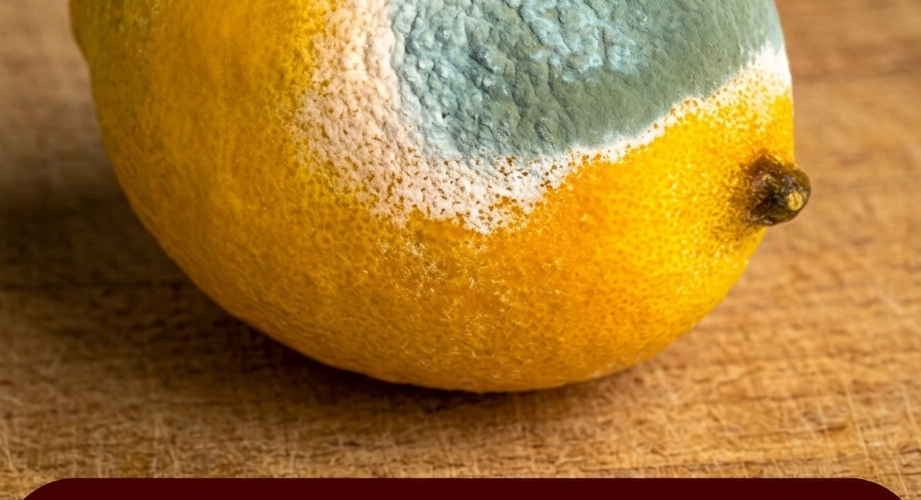
No, that’s not entirely true. It’s a myth that needs to be debunked: the mold that grows on lemons (and citrus fruits in general) can be toxic and shouldn’t be considered harmless.
The confusion stems from the fact that the typical blue-green mold that affects lemons belongs to the Penicillium genus (specifically, Penicillium digitatum and Penicillium italicum), the same genus from which penicillin is derived. However, this doesn’t mean it’s beneficial or safe to eat.
Here’s what you need to know to clarify:
Why can mold on lemons be dangerous?
Mycotoxin production: While not as dangerous as aflatoxins (which grow on nuts and grains), mold on citrus fruits can produce toxic substances such as citrinin. These substances, if ingested in large quantities or repeatedly, can have negative effects on the kidneys and liver.
Respiratory problems and allergies: The volatile spores you see as a green or white powder can be easily inhaled when handling the fruit. In predisposed individuals, those with allergies, or those with weakened immune systems, they can trigger asthma attacks, allergic pneumonia, or respiratory irritation.
Deep contamination: Because lemons have juicy, soft flesh, the invisible filaments of mold (hyphae) easily penetrate deep into the fruit, well beyond the visible stain on the peel.
What to do if a lemon has mold?
If the mold is extensive: The lemon should be thrown away whole. It’s not enough to cut off the moldy part, because the fruit’s high water content allows the invisible filaments of the fungus to contaminate even the parts that appear healthy.
If the stain is very small: If the mold is just a superficial spot on the thick peel and the flesh underneath is perfectly firm and intact, you could try removing a large portion around the stain. However, to be safe (especially if you need to use the peel or juice raw), it’s always better to be safe.
Watch out for neighbors: If a lemon is moldy in the net or fruit bowl, carefully check the neighboring ones. The spores spread quickly; wash any nearby fruits that still appear healthy and consume them quickly.
In short: if you see a lemon covered in the classic green powder, avoid smelling it closely to avoid inhaling the spores and dispose of it in the organic waste bin.