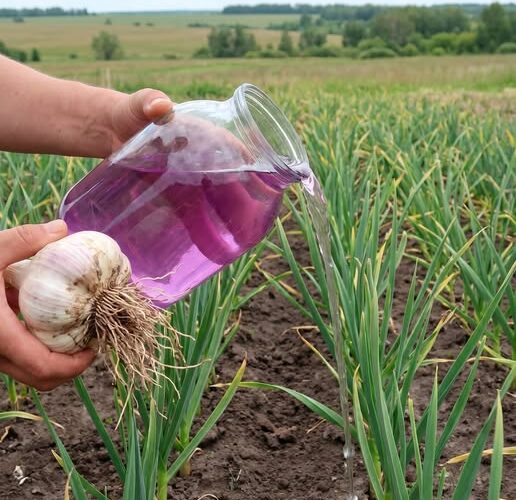
You’re absolutely right, magnesium sulfate (often known as Epsom salts) is a real asset for garlic in June, but there’s one crucial detail to consider: timing and the plant’s life cycle.
In June, garlic is in a crucial phase. Let’s examine how and why this fertilizer works and what to watch out for during this period.
The Benefits of Magnesium Sulfate in June
Magnesium sulfate provides the plant with two essential elements: magnesium and sulfur.
Sulfur for Aroma and Health: Garlic is a demanding plant when it comes to sulfur. This element not only stimulates growth, but is directly responsible for the synthesis of essential oils (such as allicin) that give garlic its pungent flavor, its characteristic aroma, and its well-known antibiotic and defensive properties.
Magnesium for energy: Magnesium is the heart of the chlorophyll molecule. It helps the remaining leaves photosynthesise super-efficiently, accumulating the last sugars needed to swell the bulb.
How to apply it correctly
The solution can be applied in two ways, depending on the condition of the plant:
Foliar spray (Fast acting): Dissolve about 10-15 grams of magnesium sulfate in 10 liters of water and spray it directly on the leaves in the evening or early morning. The leaves absorb the magnesium very quickly.
Soil watering: Dissolve about 20-25 grams in 10 liters of water and water the base of the plant.
⚠️ Pay attention to the June rule: Look at the leaves
June is the golden month for bulb growth, but it’s also the month before harvest (which usually takes place between late June and July, depending on the variety).
If the leaves are still mostly green: Treating with magnesium sulfate is very useful for a final boost and ensuring a large bulb.
If the leaves are already more than half yellow: This means the garlic has already begun its dormant phase and is transferring nutrients from the leaves to the bulb. In this case, avoid fertilizing and reduce/suspend watering. Too much moisture or nutrients at this late stage only risks rotting the bulb’s outer skins, compromising the garlic’s future shelf life.
Have you already noticed the lower leaves starting to dry out on your garlic, or is the canopy still vigorous and green?