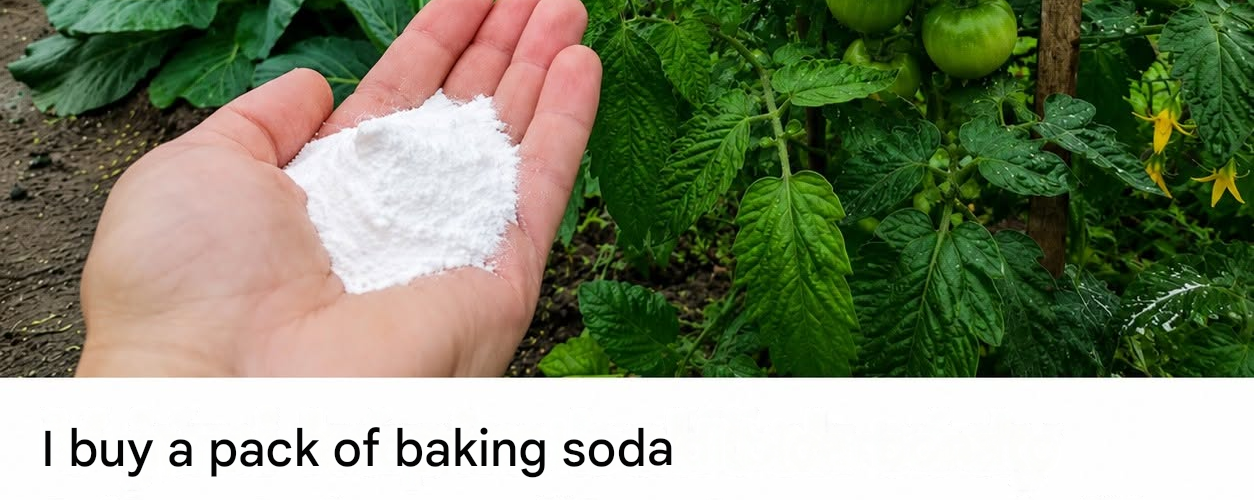
This sounds like a great and cheap summer trick! Baking powder (or sodium bicarbonate) is truly an absolutely versatile helper in the garden that can work wonders in June – when insects and fungi are at their peak.
Since it is a food product, it is non-toxic to pets, bees and birds, but extremely effective against typical pests of early summer.
Here are the three best ways to strategically use cheap baking powder in your garden this June:
Universal weapon against aphids and mites
If your roses and vegetable plants are attacked by aphids in June, a homemade baking powder spray will help. Baking powder changes the pH of the leaves, which kills the pests.
… Recipe: Dissolve 1 packet of baking powder and 1 teaspoon of mild liquid soap (or organic dishwashing detergent to make the mixture sticky) in 1 liter of warm water.
Application: Pour the mixture into a spray bottle and spray the affected plants in the evening (never in the midday sun, otherwise the leaves will burn).
Natural protection against powdery mildew and fungi
June often brings warm and humid weather – ideal breeding ground for powdery mildew and downy mildew on cucumbers, zucchini or grapevines. The sodium bicarbonate in the baking powder stops the fungi immediately.
Recipe: Shake 1 packet of baking powder thoroughly with 2 tablespoons of rapeseed oil and 1 liter of water.
Application: Spray the plants preventively every one to two weeks or at the first sign of white spots. The oil ensures that the protective film will withstand further rain.
Ant Trail Barrier
Ants are beneficial in the garden, but when they make entire trails across your patio in June or “breed” aphids on your plants, it becomes a problem.
Directions for use: Sprinkle dry baking soda as a barrier along ant trails. Good to know: Baking soda neutralizes the pH and destroys the ants’ sense of smell, causing them to lose their bearings and avoid the trails. (Note: Mixed with powdered sugar, it is deadly to ants because it causes them to bloat. If you want to repel ants with just the powder, sprinkle them with the pure powder or use cinnamon.)
Caution when applying: First test the baking soda mixture on one leaf of very sensitive plants (such as young shoots). Since baking soda is slightly alkaline, some plants cannot tolerate too high a concentration.
What specific pests in your garden do you want to primarily use baking soda against this month?