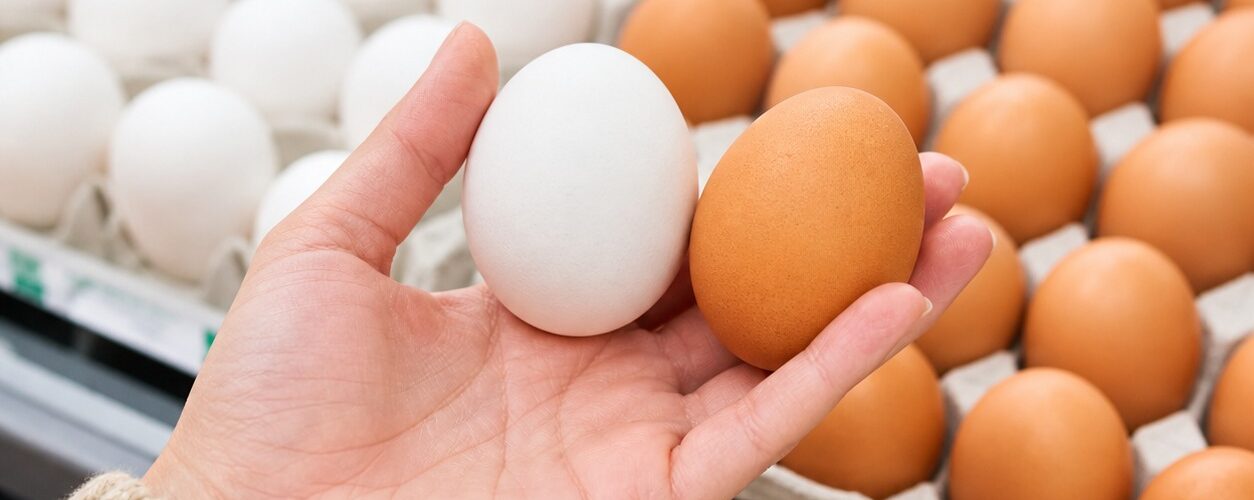
The terms used in the question, although they appear colloquially or incorrectly in some articles, do not exist according to official food safety and consumer categories. “Farm-raised” or “free-range” eggs do not exist.
In reality, the government does not produce eggs, and all egg-laying hens come from factory farms.
Your question may be about the difference between eggs from factory farms and eggs from traditional free-range farms. You can easily verify this difference before purchasing, not by looking at labels, but by checking the first digit of the official code on the shell.
Egg codes: this is a crucial difference.
The first digit of the code printed on the shell (0, 1, 2, or 3) indicates the living conditions of the hen that laid the egg. This determines the quality and conditions of the farm:
Code 3: Cage Farming (the most common type of industrial farming)
Conditions: Hens live in enclosed wire cages with minimal space to move around.
Characteristics: Inexpensive, but animal welfare is poor. Many people confuse these eggs with those from “industrial” or “government” farms.
Code 2: Deep Litter/Alternative Housing
Conditions: Hens are raised in a large, enclosed shed and are allowed to scratch freely on the floor (on straw or litter), but are not allowed outside.
Characteristics: Most commercially available eggs come from this type of farming.
Code 1: Free-Range
Conditions: Hens are allowed to roam freely on the grassy area during the day, scratch around, and live their natural lives.
Code 2: Deep Litter/Alternative Feeding Code 0: Organic
Conditions: Similar to free-range, but the hens are fed exclusively certified organic feed and do not receive preventative medications or antibiotics.
What you should know before purchasing:
If you have to choose between conventionally raised eggs (e.g., supermarket) and free-range eggs (e.g., from a farm), consider the following:
Category: Conventional (supermarket, usually code 2 or 3)
Free-range/Raised (direct sellers, market, or code 0-1)
Feed: Standardized and certified feed blend (corn, soy, vitamins). Grasses, seeds, insects, kitchen scraps + grains.
Yellow Color: Uniform, but often yellow due to natural pigments (e.g., corn, marigold extract) in the feed. Variable, but often naturally dark yellow or orange due to the consumption of fresh vegetables.
Flavor and Composition: Standard, familiar flavor. More intense and pronounced flavor; adds color to cookie dough better. Flavor and Composition: Standard, familiar flavor. Shelf Life: The expiration date on the package is easy to check. Eggs from reputable producers keep longer, but the exact laying date is more difficult to determine. Shopping Tip: If you want to do something good for your family and pets, look for eggs marked 1 (free-range) or 0 (organic) from reputable producers at the market or in stores!