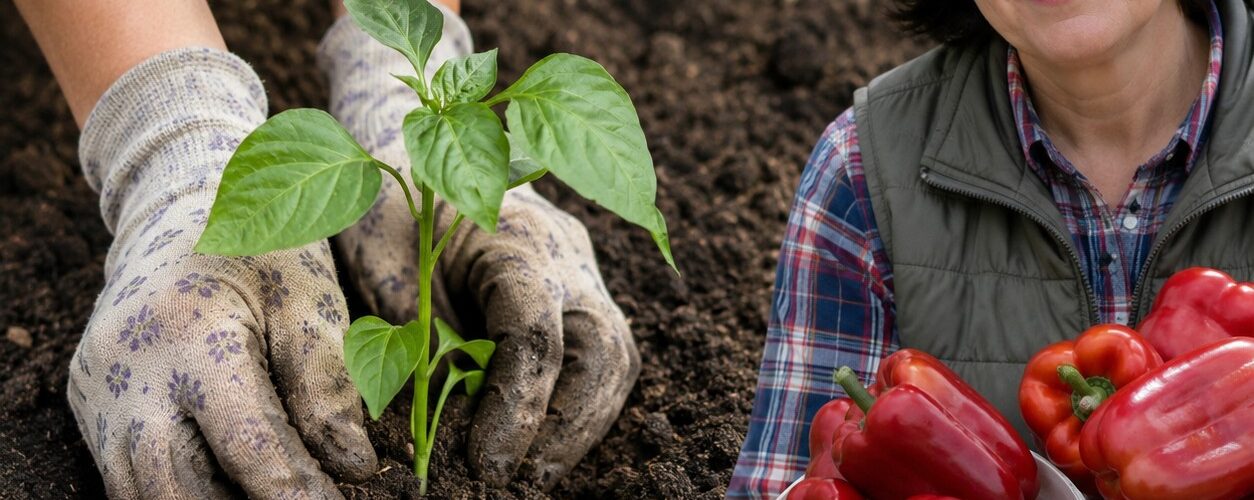
To ensure your peppers not only grow large but also develop perfect flesh (juicy, juicy, thick-walled fruits), you need to follow some important rules during the growth and fruiting phase. Peppers are particularly demanding plants, but they will reward you for your care.
Here are the most important rules for growing fleshy peppers:
The key to “fleshiness”: Potassium and calcium
Peppers’ nutritional needs change throughout their development. If you want large, thick-walled fruits, you need to adjust your nutrient intake starting in flowering:
Potassium (K): This element is responsible for fruit size, sugar absorption, and pulp thickness. Use a high-potassium fertilizer or nutrient solution from the start of flowering.
Calcium (Ca): Essential! Calcium deficiency causes blackening and rotting of the tips of pepper plants (blossom end rot). Since plants have difficulty absorbing calcium, it is recommended to apply a foliar fertilizer containing calcium nitrate (sprayed on the leaves) during the growing season.
Nitrogen deficiency: While excess nitrogen leads to lush growth, pepper plants remain small and produce thin fruits, and flowers drop easily.
The “desert” watering rule: Peppers love water but do not tolerate waterlogging. Thin, spicy peppers are almost always the result of irregular watering.
Regular watering: Keep the soil moist, but not soggy. Sudden large amounts of water (frequent watering after the soil has dried out) can cause the flesh of young peppers to crack.
Hot Water: Never water peppers with freezing tap water during a heatwave, as this will damage the plants and cause the flowers to drop. If possible, use water stored in a barrel and heated in the sun.
Light and Temperature Management
Pepper plants need light and heat, but in today’s extremely hot summers, they also need protection.
Protection from Direct Sunlight: If temperatures consistently stay above 35°C, pepper plants can suffer sunburn (white, dry spots on the berries). A thin shade net can work wonders in a vegetable garden.
Critical Threshold: If daily temperatures consistently rise above 32-35°C, the pepper’s pollen becomes sterilized, the flowers drop, and fruit does not develop.
Thinning and Pruning (Cultivation Difficulties):
Don’t let the plant grow too densely, otherwise the green mass will compromise the size of the berries.
Removing the first flower: The first flower (the queen flower) on the first branch should be removed. This will encourage the plant to develop stronger roots and a denser canopy, which will later lead to significantly higher yields.
Thinning: Remove side shoots and wilted leaves from the lower part of the stem (below the first branch) to ensure good air circulation at the base of the plant. This also helps prevent fungal diseases.
Quick checklist for fleshy peppers:
What to do? What to avoid?
Cover the soil with grass clippings or straw to retain moisture. Don’t water from above! Water that collects on the leaves encourages the development of fungal diseases (e.g., fusarium wilt, powdery mildew).
Support the plant, as branches can break under the weight of fleshy peppers. Don’t dig too deeply around the peppers, as their root system is close to the soil surface and can be easily damaged.