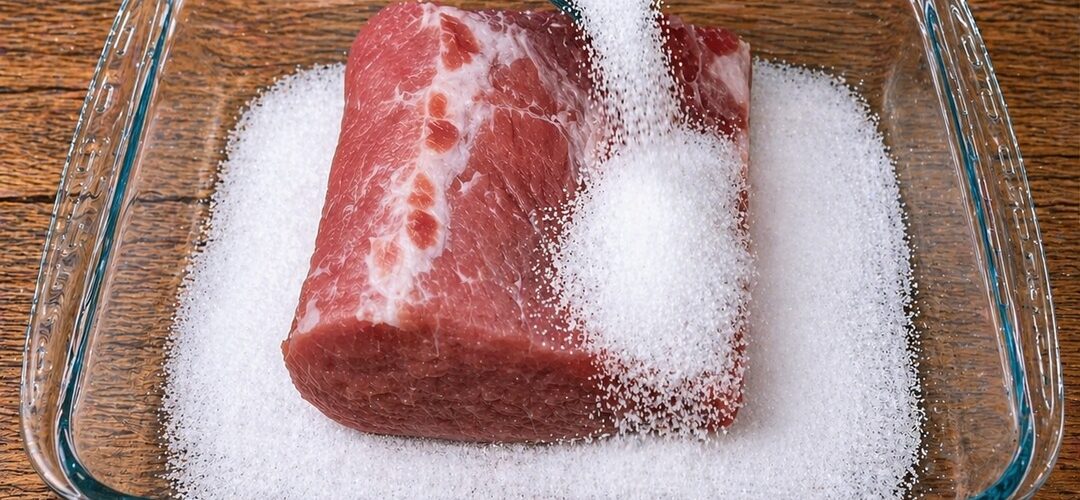
Behind this classic clickbait formula (“You won’t believe what happens!”) lies not a modern internet hype, but one of humanity’s oldest and most ingenious crafts: dry curing to make homemade ham or pancetta.
If you thickly coat fresh pork (fattier pork belly or lean neck/tenderloin are best) with salt and treat it properly for two weeks, the removal of moisture transforms it into an absolute delicacy.
Here’s the secret to what happens biologically during these 14 days and how this culinary “magic trick” really works.
What happens to the meat during the two weeks?
It’s not magic, it’s pure food chemistry:
Days 1–3 (Drainage): The salt draws water out of the meat through osmosis. After just a few hours, the meat sits in its own pool of meat juices. At the same time, the salt penetrates deep into the muscle fibers.
Days 4–7 (Preservation): Since bacteria and germs need moisture to survive, the salt makes the meat uninhabitable for them. The meat becomes shelf-stable and its texture noticeably firmer.
Days 8–14 (Aging): The meat’s own enzymes begin to break down proteins and fats. This causes the meat to lose its “raw” taste and develop that deeply savory, nutty aroma we know from Parma ham or bacon.
The 2-Week Guide for Home Use
To make delicious Italian Pancetta Stesa from a piece of pork belly (e.g., 1 kg) in two weeks, you don’t even need a smokehouse—your refrigerator is perfectly sufficient.
What you need:
1 kg boneless pork belly
35 g curing salt (or fine sea salt)
For flavor: 1 tbsp coarsely crushed black pepper, 1 tsp garlic powder, a few juniper berries, and bay leaves.
The process:
Rubbing: Mix the salt with the spices and thoroughly rub the meat on all sides.
Vacuum curing (week 1): Pack the meat in a freezer bag (vacuum sealing is best) along with the remaining spices and refrigerate for 7 days. Turn the bag over once a day to ensure the salt is evenly distributed.
Washing: After one week, remove the meat. It will be much firmer by now. Rinse off the excess salt thoroughly under cold running water and pat it completely dry.
Drying (Week 2): Wrap the meat in a clean, dry tea towel or butcher’s twine and hang it in a cool, airy place (e.g., a cellar at 12–15 °C) or place it uncovered on a rack in the refrigerator. After another week, your homemade bacon is ready to be sliced paper-thin.
⚠️ Safety note: When curing meat at home, absolute cleanliness is paramount. If the meat smells unpleasant after two weeks or shows gray/green mold (a white salt coating is normal), there has been a hygiene issue and the meat should be discarded.
Have you ever preserved meat yourself, or have you been rather skeptical about the idea of ”aging raw meat”?