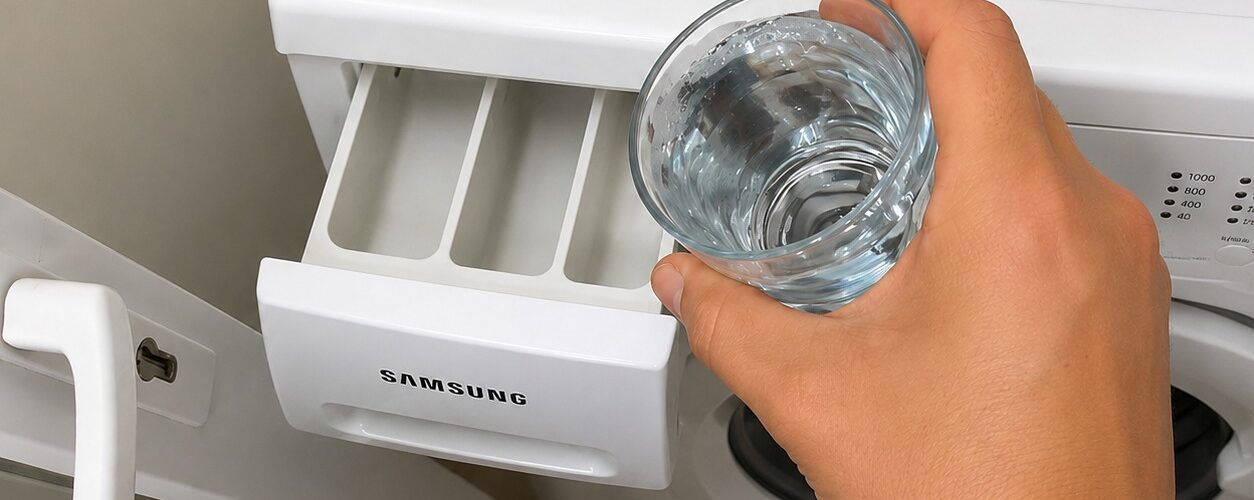
This sounds like the perfect teaser for one of those typical household hacks! Usually, behind such headlines lies a specific home remedy that promises miracles.
In most cases, this “secret tip” refers to one of two things: baking soda (or baking powder) or citric acid.
Although this method is considered “tried and tested,” it should be approached with a bit of caution. Here’s a quick overview of what’s really behind it, how it works, and where the pitfalls lie.
The “secret tip”: This is how it’s usually recommended
If you want to try the method, most experts recommend the following combination:
The remedy: Pour about 50 grams of citric acid powder or two to three tablespoons of baking soda directly into the empty drum.
The wash cycle: Run the machine empty on the hot wash cycle (at least 60°C, ideally 90°C).
What does this actually do?
The heat, combined with the home remedy, performs two important functions:
Citric acid dissolves limescale: If you have hard water, limescale builds up on the heating elements. The acid dissolves this limescale.
Baking soda and heat kill germs: Modern wash cycles at 30°C or 40°C may be environmentally friendly, but they are a breeding ground for bacteria and fungi. This often leads to the washing machine (and the laundry) smelling musty. The heat of the hot wash cycle kills these germs.
⚠️ The fine print: Why you should be careful
Home remedies are inexpensive, but they were not developed for modern washing machines. If you use this hack, please note the following:
Danger to the seals: Pure vinegar essence or excessively high doses of citric acid can damage the rubber seals and hoses. Over time, rubber becomes porous, which in the worst case can lead to water damage. Citric acid is gentler than vinegar in this regard, but should never be overdosed.
Should citric acid not be used too hot? Opinions differ on this. If citric acid is heated too much (above 60°C), it can combine with limescale to form calcium citrate. This is a rock-hard mass that clogs the machine even more. Tip: When using citric acid, choose the 60°C program instead of 90°C.
The safer option
If you want to be absolutely sure, a special washing machine cleaner from the drugstore is often the better choice. These products contain surfactants that also dissolve grease and detergent residue (the infamous “grease bug”), which acids alone often cannot do – and they protect the rubber parts.