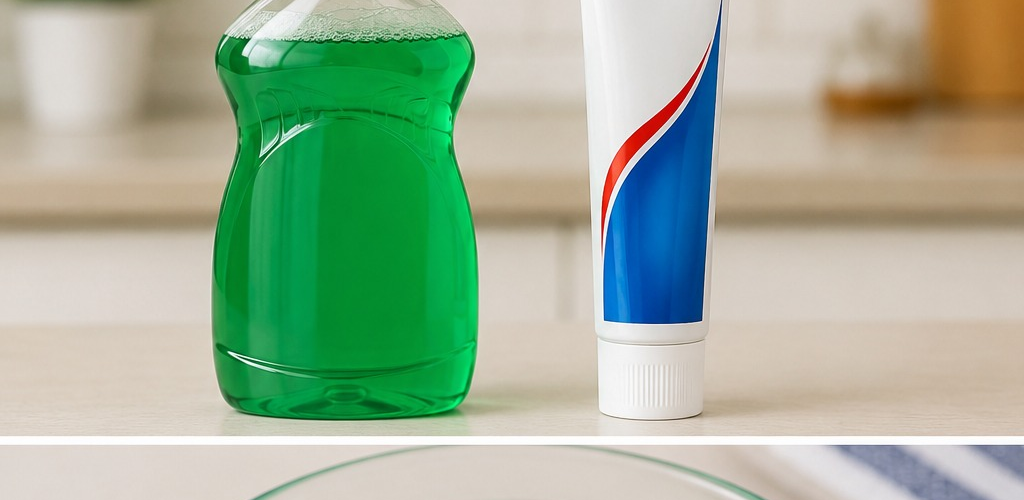
This sounds like the next viral social media trend! “Combining dish soap and toothpaste” is a classic clickbait in the world of household hacks. The result is often touted as a “magic miracle cure” for just about everything.
In reality, however, the unexpected result isn’t magic, but simple chemistry. When you mix the two, you get an extremely effective, yet gentle, scouring agent.
Here’s the fact check: why this combination actually works, what it’s great for, and where you should probably avoid using it.
Why does the combination work so well?
The two components complement each other perfectly in their properties:
The dish soap is the grease remover: it breaks the surface tension of the water and dissolves stubborn grease and oil stains (e.g., in the kitchen).
Toothpaste acts as a gentle abrasive: it contains tiny polishing particles (usually silicates or chalk) designed to scrub plaque off teeth without damaging the enamel.
Mixing the two together creates a paste that is both a powerful grease cutter and provides mechanical action without scratching surfaces as harshly as scouring powder.
Best Uses: This Hack Is Brilliant
If you mix equal parts of the two, the paste is perfect for:
White sneaker soles: A classic. The paste restores the shine to yellowed or dirty rubber soles of sneakers. Simply rub it in with an old toothbrush and wipe with a damp cloth.
Burnt pots and pans: Perfect for the bottoms of pans where grease has burned on. The dish soap loosens the grease, and the toothpaste scrubs it away.
Bathroom and kitchen fixtures: Limescale and soap scum on chrome faucets disappear in a flash, and the chrome often shines like new afterward.
Iron soleplates: If the soleplate of your iron is slightly burnt or sticky, you can smooth it out again with this paste when it’s cold.
⚠️ Where you should never use this mixture
Even though it seems like a cure-all, caution is advised:
High-gloss surfaces (e.g., piano lacquer or glossy kitchen cabinets): Even though toothpaste is gentle, it scratches. On delicate high-gloss furniture, it leaves dull, cloudy marks.
Screens and displays: Smartphones, televisions, and laptops have special coatings. The abrasive particles in toothpaste immediately destroy these protective layers.
Real silver or delicate jewelry: While this tip is often given for silver, toothpaste can create micro-scratches on the soft precious metal, in which dirt will later accumulate even more quickly.
Conclusion
It’s not a medical miracle, but as a homemade “power scouring cream” for the kitchen and shoes, the duo of dish soap and toothpaste actually works surprisingly well.