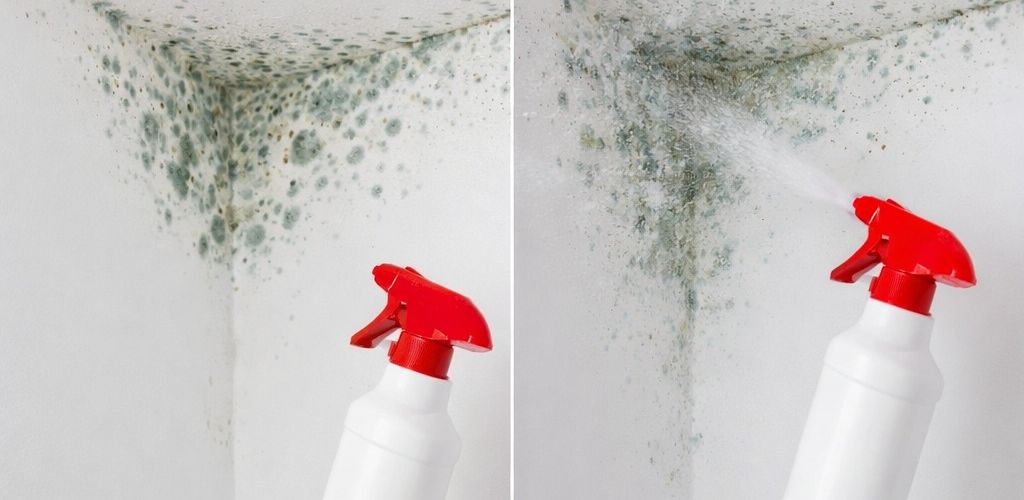
It sounds like one of those “miracle” tips that often circulate on social media! There are indeed some home remedies that can quickly remove mold from surfaces, but it’s important to keep a few important facts in mind.
Here’s a quick overview of what’s usually behind these “bleach-free” solutions:
Popular Chlorine-Free Alternatives
If you’re not using bleach (chlorine), it’s usually one of these substances:
Hydrogen peroxide (3%): Has antifungal and antibacterial properties. It essentially removes mold from the pores without the pungent odor of chlorine.
Pure alcohol (isopropanol/ethanol): Absorbs moisture from mold and kills spores. It evaporates quickly but won’t lighten existing stains.
Vinegar: Often recommended, but risky. On calcareous surfaces (like plaster or concrete), vinegar neutralizes the lime and actually provides a breeding ground for mold.
Why “Instantly Disappearing” Can Be Complicated
Mold is like an iceberg: what you see on the wall is only the fruiting body.
The Roots: Mold mycelia often penetrate deep into wallpaper or plaster. A superficial cleaning only removes the appearance.
The Cause: If the wall is damp (due to thermal bridges or inadequate ventilation), mold usually reappears after 2-4 weeks, regardless of the effectiveness of the treatment.
Stains: Chlorine-free products kill the fungus, but often don’t remove the dark pigments. So, if the stain disappears immediately, an oxidizing agent (like peroxide) is usually involved.
My Application Tip
If you’re treating walls:
Don’t dry brush: this simply lifts the spores into the air you breathe. Always clean with a damp cloth.
Wear protective gear: Even without chlorine, spores are harmful to your lungs when cleaning. A simple mask can help.
Check the wallpaper: If the mold is behind the wallpaper, spraying won’t help; unfortunately, that part of the wallpaper will have to be removed.
Would you like me to help you determine why the area is moldy (for example, by calculating the dew point on the wall)?