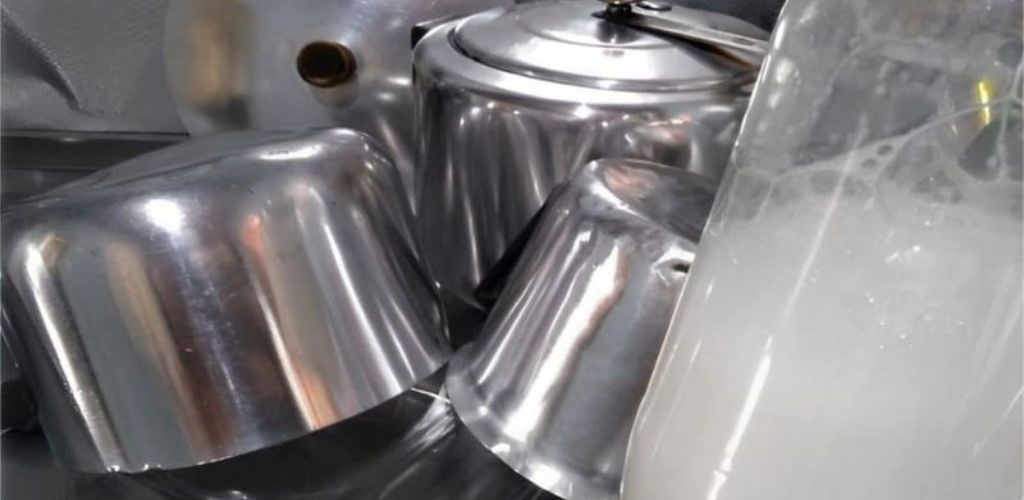
This is an interesting tip that’s often passed down from family to family, but with aluminum, a little caution is needed to maintain its shine. Aluminum is a reactive metal, and while a (canned) detergent combined with the right technique can help, it has its own specifics.
Here’s a breakdown of why it works and how to make aluminum cookware shine without damaging it:
Why does detergent work?
Detergent itself doesn’t chemically polish aluminum, but it’s essential as a lubricant and degreaser. It also removes the thin film of grease that makes aluminum gray and dull.
Procedure for a “mirror-like” shine
If you want to make an old aluminum cookware look like new, try this procedure:
Hot bath: Immerse the cookware in hot water with plenty of detergent. Let it degrease. Gentle mechanics: Use a very thin stainless steel wire or a special cleaning wool (soaked in detergent). Clean the surface using circular motions. The detergent works so that the wire doesn’t create deep grooves, but simply smooths the surface.
Acid stains: If the aluminum is oxidized (black spots), detergent isn’t enough. You’ll need an acidic product. Boil water in a pot with lemon slices or a tablespoon of citric acid. The oxidation will disappear and the surface will become shinier.
Dry thoroughly: The aluminum must not air dry on its own, otherwise drips and dried stains will form. Polish it immediately with a dry cloth.
⚠️ What to watch out for (big warning)
Never put aluminum in the dishwasher! Dishwasher tablets are highly alkaline, and the aluminum will turn black, opaque, and form an oxide layer that stains your hands. This is the exact opposite of what you want. Anodized Aluminum: If your pan has a special surface treatment (hard anodizing), rough polishing will ruin it. This trick with detergent and steel wool is only intended for clean, untreated aluminum.
A little finishing trick
If you want your aluminum to shine like a mirror, after washing with detergent, apply a little toothpaste (white, not gel) to a dry cloth and buff the surface. The fine abrasive particles in the paste will create a final “gloss” effect.
Do you have old, classic aluminum pans or modern, nonstick ones where the aluminum is only present on the inside?