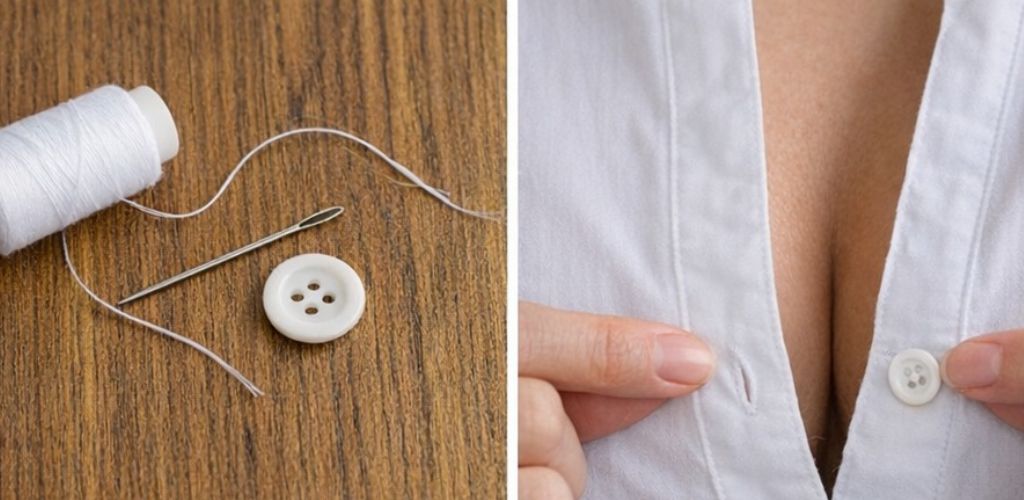
It always happens at the wrong time: a favorite blouse, a small tear right on the chest, and the panic of having to throw it away. But if the hole is small, you don’t need to be an expert seamstress to save it.
Here are the 3 most effective methods for solving the problem using just a needle (and a pinch of creativity):
- The “invisible” darning (Spider-like technique)
If the hole is very small (a millimeter or so):
The trick: Take a thin needle and a thread that matches the color of the blouse.
The action: Pass the needle only through the fibers of the fabric around the hole, creating a sort of small “star”. Pull the thread gently: the fibers will come together, closing the gap without creating creases.
The finishing touch: Iron the area with a little steam to flatten the fibers and make the mending imperceptible.
- Transform the flaw into a detail (Decorative embroidery)
If the hole is too large to close without pulling the fabric, the best solution is to hide it “in plain sight”:
Daisy stitch: Embroider a small flower or star just above the hole.
Why it works: A small embroidered detail on the chest looks like an intentional design element. If you want a symmetrical look, add a second flower elsewhere on the blouse.
- Apply a pearl or sequin
If the blouse is elegant:
The idea: Sew a small pearl, crystal, or decorative jewel button over the hole.
Effect: The blouse will look unique and precious.
💡 Top tip: Use fusible interfacing
If your blouse is made of a very lightweight fabric (like silk), you might want to apply a small piece of thin fusible interfacing to the back before sewing. This stabilizes the edges of the hole and prevents the tear from spreading while you try to sew it up.
Remember: Always work from the wrong side of the garment to hide any thread knots!
What is the fabric of your blouse? If it’s silk, cotton, or linen, I can advise you on the best needle type to avoid further damaging the fibers!