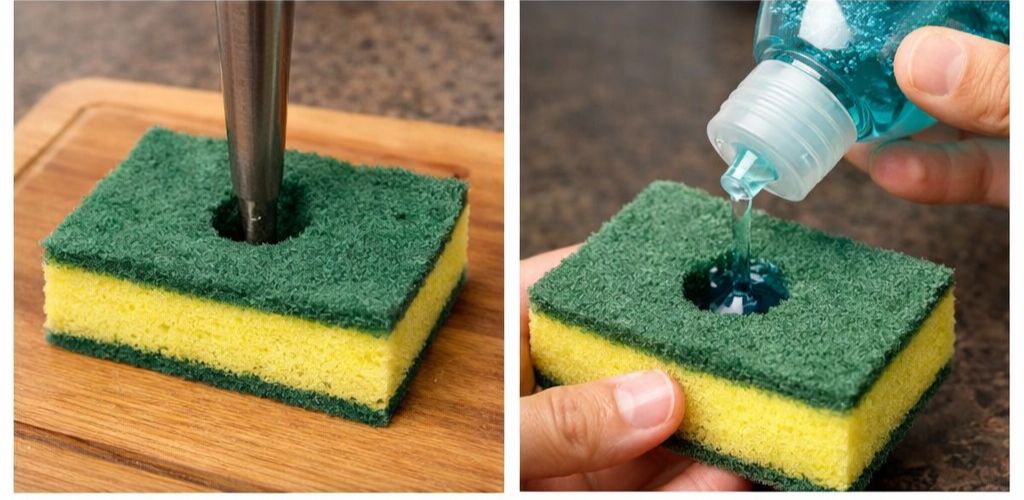
Making a hole in a dish sponge might seem strange, but it’s one of those “grandma’s tricks” that, once tried, you’ll never give up. It’s not about aesthetics, but about hygiene and extreme practicality.
There are two main ways to use this trick, depending on where you decide to make the hole. Here’s why you should do it now:
- The Center Hole: To Clean Cutlery and Chopsticks in One Go
If you make a small hole (or a cross cut) right in the center of the sponge, you’ll transform the way you wash your cutlery.
How it works: Insert the utensil (knife, spoon, or fork) into the hole and pull.
The advantage: The sponge will simultaneously envelop both sides of the utensil, cleaning even the edges in one fluid motion. It’s perfect for removing food debris from between fork tines or cleaning chopsticks without letting them slip.
- The hole on the edge: For hygiene and as a soap dish
Making a small hole on the side solves the #1 kitchen problem: bacterial growth.
Quick drying: By inserting the sponge into the faucet spout (if the hole is large enough) or hanging it on a small hook above the sink, the sponge will remain suspended.
Why it’s essential: A sponge placed on the bottom of the sink or in a container stagnates in water, becoming a haven for bacteria. When hung, the water drains away by gravity, the sponge dries in half the time and doesn’t give off unpleasant odors.
- The bonus trick: The “soap-saving” sponge
Some people prefer not to make a through hole, but rather a small lateral incision (like a pocket) in the yellow part of the sponge.
Make a horizontal cut along one side of the sponge.
Place any small pieces of solid soap inside (those that become too small to be used normally).
When you wet the sponge, the soap pieces will gradually dissolve, creating a consistent lather without having to use liquid detergent every time.
Summary of benefits:
Type of cut Main purpose Result
Central hole Cleaning cutlery Doubled speed and safety (hands protected from knives)
Side hole Storage Zero bad odors and fewer bacteria
Side pocket Savings Recycling soap scraps
An important tip: Remember that, hole or no hole, the sponge should be sanitized every 2 days (placing it wet in the microwave for 1 minute or in the dishwasher) and completely replaced every 2-3 weeks.
Would you like to discover another trick for using old sponges (those now ready to be thrown away) to care for your potted plants?