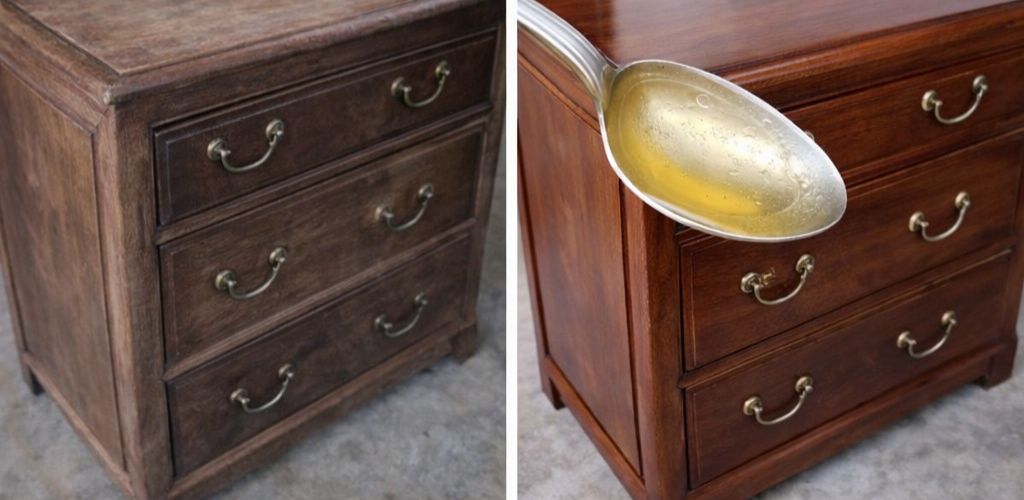
Matte wood kitchen cabinets are beautiful, but they present a particular challenge: they tend to retain fingerprints, grease, and stains that seem impossible to remove without over-polishing (ruining the matte effect) or leaving streaks.
To clean them and restore their shine (meaning “alive” and nourished, not shiny), here are the restorers’ secrets for everyday cleaning:
- The magic formula: Oil and Vinegar (To nourish and clean)
This is the perfect combination for matte wood because the vinegar cleans, while the olive oil regenerates the fibers without creating an artificial shine.
The mixture: 2 tablespoons olive oil + 1 tablespoon white vinegar (or strained lemon juice).
How to use: Pour the mixture into a spray bottle and shake well. Spray on a microfiber cloth (never directly on the wood) and wipe along the grain.
Result: Removes dirt and moisturizes the wood, leaving it looking healthy and silky.
- To remove stubborn grease: Marseille soap
If the furniture near the stove is sticky, you need a gentle but effective cleaner for grease.
What to do: Dissolve a tablespoon of liquid Marseille soap (or loose flakes) in a liter of warm water.
The trick: Use a well-wrung-out cloth. The secret to matte wood is to never over-wet it, as excess moisture can penetrate and swell the fibers or stain the finish. Dry immediately with a second dry cloth.
- To remove fingerprints: Black tea
It may seem strange, but black tea contains tannins that are excellent for cleaning wood and bringing out the natural color without altering the matte finish.
What to do: Brew a very strong black tea (two teabags in a cup of water) and let it cool.
How to use: Wipe the areas with fingerprints or grease stains with a cloth moistened with tea. The tannins will dissolve the grease, leaving a smooth surface.
The fundamental technique for avoiding streaks
For dull wood, the technique is as important as the product:
Follow the grain: Always clean by moving the cloth in the direction of the wood grain. Moving in circles creates streaks that are visible when held up to the light.
Immediate drying: This is the most important step. Always wipe with a dry microfiber cloth immediately after wet cleaning.
Avoid silicone products: Avoid commercial furniture sprays that contain silicones. They create a shiny film that over time attracts more dust and makes the furniture “sticky.”
Treatment Summary Table:
Problem Solution Frequency
Dust daily Dry microfiber cloth Daily
Fingerprints and Stains Cold black tea Weekly
Cooking grease Water and Marseille soap As needed
Dull/dry wood Oil and vinegar Every 2-3 months
One last tip: For cracks or moldings where dirt accumulates, use a soft-bristled toothbrush moistened with the water and Marseille soap solution.
Would you like to know how to remove those annoying surface scratches from wooden furniture using a simple walnut?