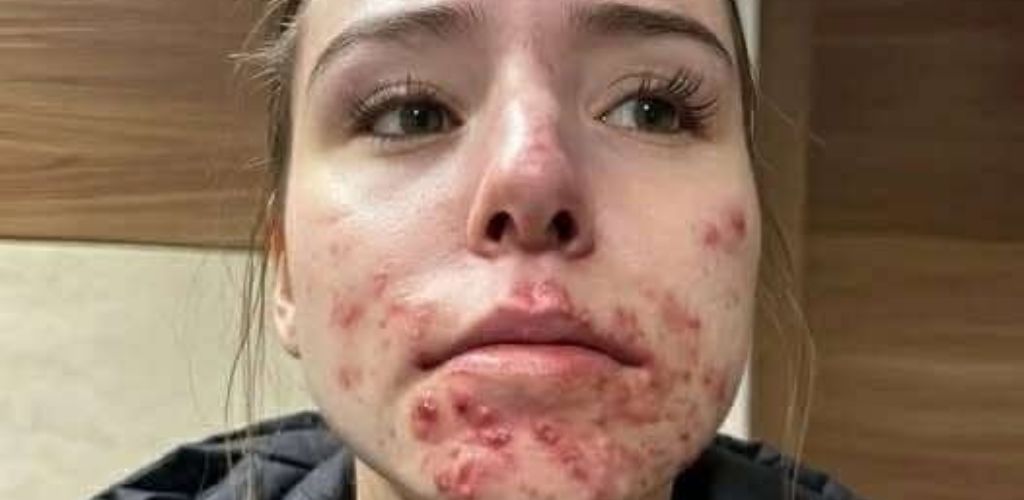
The skin is often referred to as the “mirror of the soul” or “mirror of inner health.” It is the body’s largest organ and can provide subtle or obvious signs of hidden health problems that have nothing directly to do with the skin itself.
Important: These clues are for informational purposes only and do not replace a medical diagnosis. If you experience persistent or concerning skin changes, you should always consult a dermatologist or primary care physician.
Here’s an overview of what your skin could tell you about hidden health problems:
- Color Changes (Colour)
Skin Change Possible Indication of… Details
Yellowing (Jaundice) Liver or Gallbladder Diseases Occurs when bilirubin (a breakdown product of the blood pigment) cannot be processed properly. The yellowing often first appears in the eyes (sclera).
Unusual paleness, anemia (anemia) or low blood pressure. Can be caused by a lack of red blood cells (e.g., iron deficiency) or reduced blood flow.
Gray-yellow discoloration. Hypothyroidism. Skin may appear dry, cool, and pale yellow, often accompanied by fatigue and hair loss.
Brown/dark patches in skin folds (acanthosis nigricans). Insulin resistance or diabetes mellitus. Dark, velvety skin thickenings, often on the neck, armpits, or groin. A strong warning sign of elevated insulin levels. - Noticeable redness and rashes.
Skin change. Possible indication of… Details.
Butterfly-shaped redness on the face. Systemic lupus erythematosus (autoimmune disease). A red, butterfly-shaped redness extending across the nose and cheeks. Can be a symptom of inflammation in the body.
Unexplained, widespread redness (flushing) High blood pressure or hormonal disorders Sudden, sudden redness, which can also indicate menopause or, rarely, certain tumors.
Eczema and severe itching (pruritus) Kidney or liver disease Persistent, severe itching without a visible rash can be a sign that the kidneys or liver are not detoxifying properly.
Persistent, inflammatory nodules/pustules Inflammatory bowel disease Certain skin rashes such as erythema nodosum or pyoderma gangrenosum often occur in association with Crohn’s disease or ulcerative colitis. - Changes in structure and texture
Skin change Possible indication of… Details
Standing skin folds (turgor) Dehydration (fluid deficiency) When the skin on the back of the hand is pulled up between two fingers and only slowly returns to its original shape.
Small, red, spider-web-like vessels (spider nevi) Liver cirrhosis or severely elevated estrogen levels. Tiny vascular changes with a central red dot and spider-like extensions, usually on the upper body.
Thin, easily damaged skin with stretch marks (striae). Cushing’s syndrome. Caused by an excess of cortisol, which makes the skin brittle. The stretch marks are often wide and purple.
Yellowish fatty nodules on the eyelids (xanthelasma). Lipid metabolism disorders (high cholesterol). These soft, yellowish plaques can indicate elevated blood lipid levels. - Hair and nail problems
Skin change. Possible indication of… Details
Massive, diffuse hair loss. Iron deficiency, thyroid dysfunction, or stress. Sudden or persistent hair loss (not patchy) may indicate a hormonal or mineral imbalance.
Excessive hair growth in women (hirsutism) Polycystic ovary syndrome (PCOS) or other hormonal disorders Increased dark hair growth in areas typically seen in men (beard, chest, stomach)
Brittle or spoon-shaped nails Iron deficiency Nails that split easily or have a hollow in the middle (koilonychia)
Chapped corners of the mouth (perlèche) Iron, zinc, or vitamin B12 deficiency Can also occur with diabetes or atopic dermatitis, but is often a sign of a nutrient deficiency. - Psychological and stress-related signs
Skin changes Possible indication of… Details
Sudden acne or eczema flare-ups Severe psychological stress The skin and the nervous system are closely connected. Stress hormones such as cortisol can stimulate inflammation and sebum production.
Itching that worsens with relaxation. Psychosomatic or nervous cause. Itching that occurs before falling asleep or during rest periods can indicate inner restlessness.
Conclusion:
Your skin is your early warning system. If you notice a change that occurs suddenly, grows rapidly, doesn’t go away on its own, or is accompanied by general symptoms (fatigue, weight change, pain), this is a reason to seek medical advice.