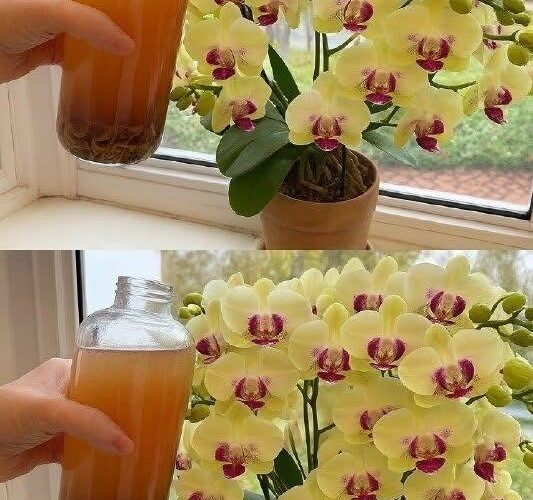
Behind the sensational social media headlines, you’ll usually find one of the few well-known DIY tricks – most notably garlic water, lemon water, or rice water. While some of these home remedies do provide gentle trace elements, the real flowering boom is usually triggered by entirely different botanical factors.
The most popular “miracle cures” fact-checked
Home Remedies | Promised Effect | Botanical Reality
Garlic Water: Stimulates growth & combats fungi | Beneficial: Contains natural sulfur & allicin; has a mild antibacterial effect and strengthens the roots’ immune system.
Lemon Juice (a few drops): Flowering shoot activator | Beneficial: Lowers the pH of hard tap water, which improves nutrient absorption.
Rice Water (unsalted): Natural fertilizer | Conditionally beneficial: Provides some potassium, vitamin B, and starch, but should only be used highly diluted (risk of mold).
… Ice Cube Trick: Simple Watering Dangerous: Ice on the roots of tropical Phalaenopsis orchids causes cold shock, tissue damage, and root rot!
The 3 Real Success Factors for More Blooms
The Temperature Stimulus (The Most Effective Trick): Orchids need a cool stimulus to produce new flower spikes. In autumn, place the plant in a cooler location with nighttime temperatures of 15–18 °C (instead of the usual 21–23 °C) for 2–3 weeks. This temperature drop reliably triggers bud formation.
Watering Using the Immersion Method: Instead of watering from above, immerse the inner pot in lukewarm, low-lime water (or rainwater) for about 10–15 minutes every 7–10 days. Allow it to drain completely afterward – waterlogging is the number one cause of orchid death.
Read the Roots as a Barometer:
Silvery-gray: The orchid is thirsty.
Lush green: The plant is perfectly nourished.
Brown/mushy roots: If present, remove immediately with disinfected scissors.