Ingredients
TYPE 0 FLOUR
440 gr
WATER
380 gr
RICE FLOUR
35 gr
SOY FLOUR
25 gr
SALE
10 gr
FRESH BREWER’S YEAST
3 gr
EXTRA VIRGIN OLIVE OIL
1 tablespoon
SUGAR
1 level teaspoon
SEMOLINA FOR FLOURING
q.b.
TO SEASON
TOMATO PUREE
500 gr
FIOR DI LATTE MOZZARELLA
250 gr
EXTRA VIRGIN OLIVE OIL
q.b.
SALE
q.b.
FRESH BASIL
q.b.
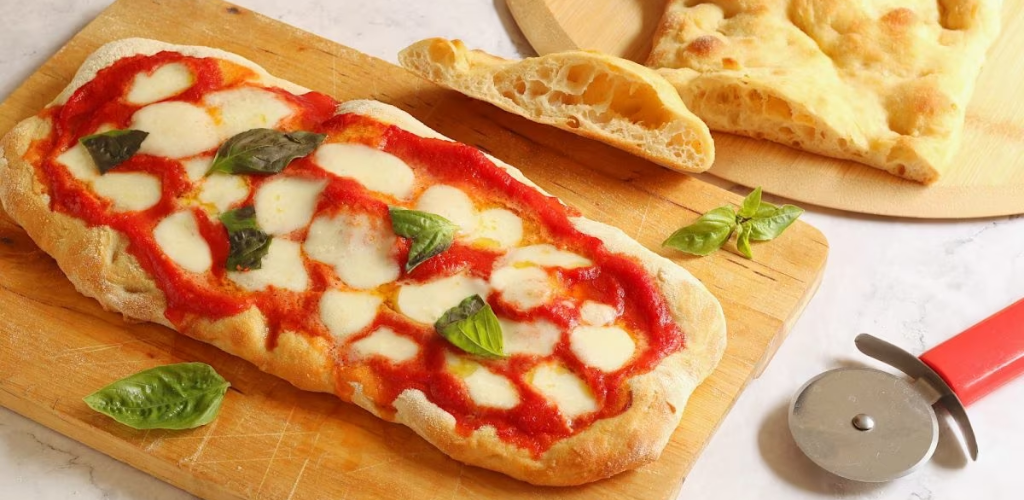
The Roman pinsa is a unique leavened product made with a dough based on wheat flour, rice and soy. It is a modern reinterpretation, with contemporary ingredients and techniques, of a product dating back to the era of ancient Rome. Thanks to the particular blend of flours , it is crunchy on the outside and soft on the inside. It is considered the ancestor of pizza, even if compared to this it has fewer calories and is particularly light. Its airy interior is due to a high hydration of the dough, at least 75%, and to a controlled , slow and prolonged leavening which allows for perfect maturation: the result is a very digestible final product. The term pinsa comes frompinsare , or “stretch”, in fact its shape is rigorously oval and elongated, as reaffirmed also in the relative disciplinary with which the characteristics and methods of preparation of this delicious and much loved leavened product are defined.
The Roman pinsa, in its most rigorous preparation, requires the use of mother yeast. Here you can find our version which involves the use of a minimum quantity of brewer’s yeast , to guarantee a well-developed and digestible result. To prepare the Roman pinsa you can find ready-made flour mixes on the market , in which the quantities of wheat, soy and rice flour are already balanced. However, if you want to try your hand at the basic recipe, here you will find the right indications to start from the creation of the flour mix.
Generally the pinsa dough is made in the machine until it is shiny and strung. But, respecting adequate pauses and folding cycles, it is possible to obtain a smooth dough even by hand , exactly like the one we propose, so that everyone can replicate this preparation at home.
In our recipe we seasoned the pinsa with tomato and mozzarella , but we also leave you with a series of tasty ideas for filling the pinsa and making it truly unforgettable.
Find out how to do it perfectly by following the step-by-step procedure and advice. If you love this kind of leavened products, in a homemade version, try the double-cooked pizza and the classic Neapolitan pizza recipe .
How to prepare Roman pinsa
Step 1
Collect the water at room temperature in a jug and add the sugar
1
, then stir and dissolve completely.
Step 2
Then add the brewer’s yeast
2
and mix. Keep aside.
Step 3
Collect the type 00 flour in a large, dry and clean bowl and add the rice flour
3
.
Step 4
Add the soy flour to the powders
4
.
Step 5
Mix the flours until they are evenly distributed
5
.
Step 6
Add the water in which the yeast must be perfectly dissolved and mix gradually with a fork
6
.
Step 7
Pour the oil into the mixture as well
7
.
Step 8
Finish with salt
8
.
Step 9
Knead with your fingertips, or with a tarot, just long enough to mix the ingredients completely
9
. The mixture will be soft and sticky.
Step 10
Cover the bowl with a lid
10
, or with a sheet of plastic wrap, and let it rest away from heat sources for about twenty minutes.
Step 11
Then take the dough again and make a round of folds in the bowl: pinch the dough on each side outwards and fold it inwards
eleven
. Then cover again with the lid and repeat the round of folds twice more every 30 minutes.
Step 12
Transfer the mixture to a floured work surface at this point
12
and widen it.
Step 13
Fold it over on itself, turn it upside down and roll it up to form a tight and elastic dough
13
.
Step 14
Transfer the dough into an airtight bowl with a lid, well greased at the base
14
. Then close it, let it rise at room temperature for half an hour and then put it in the fridge for at least 12 hours.
Step 15
Once the time has elapsed at a controlled temperature, the dough should appear doubled and taut
15
.
Step 16
Turn it upside down on the floured work surface, spread it with your fingertips and roll it up on itself as if to form a roll
16
.
Step 17
Divide the roll into three equal parts, then stretch and wrap each portion around itself to form three rolls
17
.
Step 18
Arrange the three loaves on a wooden surface, generously sprinkled with semolina, also flour the surface
18
and leave to rise for 1-2 hours, covering them with a double cloth to prevent the surface from drying out.
Step 19
In the meantime, collect the tomato puree in a bowl and season it with a spoonful of oil and a pinch of salt, then mix
19
and keep aside.
Step 20
Chop the fior di latte
20
and then let it drain to lose the excess liquid.
Step 21
Heat the oven to the maximum temperature for at least 20 minutes, placing a flat dripping pan on the lowest level inside. Then take the first loaf with a tarot and seal the edges with your fingertips
21
.
Step 22
Now roll out the dough in the center by pressing with your fingertips to form an oval about thirty centimeters long
22
.
Step 23
Making sure that the base of the pinsa is well floured, drag it onto an oven shovel and season the surface with oil
23
.
Step 24
Let the pinsa slide onto the hot dripping pan in the oven and cook for 15-20 minutes if you want to dress it white like focaccia, or take it out after the first 10 minutes to dress it with the tomato puree and mozzarella
24
.
Step 25
Bake the seasoned pinsa again for 5-10 minutes until golden brown, switching to the ventilated or grill mode if necessary to melt the mozzarella. Remove from the oven, add the fresh basil and serve piping hot
25
.
Condiments for bread
The best way to fill the pinsa is to use raw seasonings and distribute them on its surface when it comes out of the oven, but you can also fill it if you prefer.
Pinsa with mortadella and burrata is an idea to take into consideration, excellent especially in summer or for picnics.
Another very popular filling is the pinsa with potatoes and raw ham : cut the potatoes into thin discs and add two-three slices of raw ham when the pinsa comes out of the oven.
For a spicy flavour, chilli pepper can be combined with buffalo mozzarella and zucchini to flavor the base of the pinsa with a tasty and original combination: alternate the zucchini with slices of buffalo mozzarella and complete the filling with a sprinkling of chilli pepper.
Another idea is a vegetarian gourmet pinsa prepared with date tomatoes and ricotta cheese . Remove the pinsa from the oven and stuff it with datterini tomatoes and seasoned with oil and salt. Add the ricotta and serve the pinsa hot or warm.
Tips and tricks
Decide what height to give the loaves, depending on the type of pinsa you want to make: to fill it they will have to be higher, otherwise roll them out so that they are thinner.
To obtain an even lighter and more digestible dough , replace the brewer’s yeast with mother yeast.
The history of the Roman pinsa
The word pinsa comes from the Latin pinsère which means “to stretch”, therefore the act of crushing and pounding. In fact, according to the original recipe, the Roman pinsa was an elongated flatbread made with water and mixed cereals (barley, spelled, millet). This Schiacciata, made with poor ingredients, was prepared in ancient times by Roman peasants who seasoned it with salt and aromatic herbs.
storage
Once cooked, the Roman pinsa can be stored in the refrigerator, in a special airtight container, for 1-2 days . At the time of consumption, heat it in the oven for a few minutes or on a hot plate.