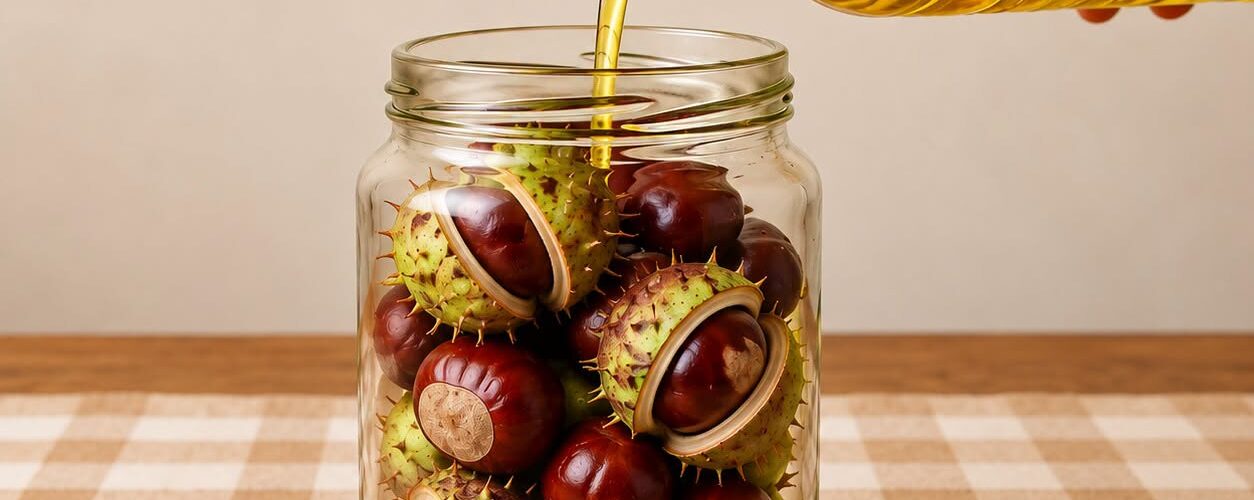
Steeping horse chestnuts in oil is an old folk remedy said to help with joint pain, rheumatism, or tired legs.
The problem with oil infusions (macerates): The active ingredients in horse chestnuts (such as aescin, which strengthens blood vessels) are primarily water- or alcohol-soluble; they barely dissolve in fatty cooking oils. Furthermore, fresh chestnuts can easily go moldy when submerged in oil due to their moisture content.
A more effective alternative (alcohol tincture): Active ingredients can be extracted much more efficiently by steeping chopped chestnuts in high-proof alcohol (at least 40%) for 3–4 weeks. This tincture can then be used undiluted for rubbing onto the skin or processed further with oil and beeswax into a vein-soothing salve.
Alternative use: Thanks to their saponin content, chestnuts make an excellent organic laundry detergent (when crushed and steeped in hot water).
If you are dealing with edible sweet chestnuts (marrons), they should be stored in a cool, dry place; preserving them in oil offers no benefit regarding shelf life.