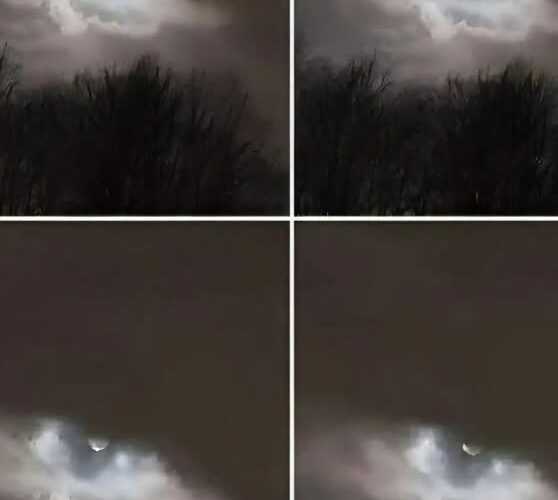
This is the typical headline of a classic clickbait puzzle that you often find on news sites or social media. The story behind it usually turns out to be an optical illusion, a natural phenomenon or an amazing coincidence.
Here are the three most common resolutions behind such viral image headlines:
- The “camouflage puzzle” (animal in nature)
What you think you see: A completely normal landscape – a pile of stones, a rock face or a snowy forest.
What you can really see: A perfectly camouflaged animal (e.g. a snow leopard, an owl or a snake) that has seamlessly adapted its color to its surroundings.
The aha moment: Only when you zoom in extremely can you see the eyes or the contours of the animal that is looking directly into the camera. - The optical illusion through perspective
What you think you see: A floating object, a “giant” in the background or a seemingly impossible landscape.
What can really be seen: A skillful perspective (Forced Perspective). A small object (like a toy car or a dog) stands close to the lens while the photographer stands further back. This causes the dog to act, for example: B. as big as a house. - A rare weather or natural phenomenon
What you think you see: A UFO, a hole in the sky or a floating island.
What can really be seen:
Fata Morgana (Fata Morgana/Superior Mirage): A ship or island appears to float above the horizon or water.
Lenticular Clouds (Lenticularis): Cloud formations that look perfectly like a flying saucer.
Fallstreak Hole: A circular hole in the middle of a closed cloud cover.
Conclusion: If a headline advertises exact kilometer information (“21 km from his home”), it is usually about a photographer who happened to press the shutter button at the right angle while taking a walk near his home.