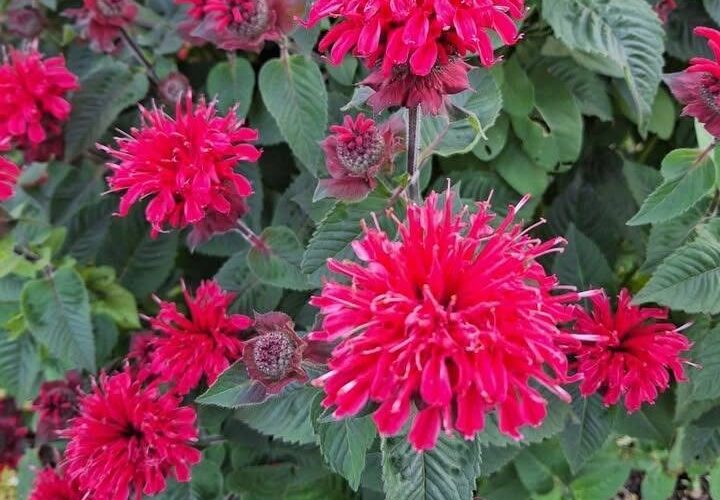
Headlines about “native perennials every gardener should plant” usually refer to purple coneflower (Echinacea purpurea), mallow, Christmas rose (Helleborus), or foxglove (Microcephalus). However, under our conditions, this description applies perfectly to purple coneflower and mallow.
These native (or long-cultivated) perennials are enjoying increasing popularity in modern garden design. Here are the main reasons why they should be in your garden:
Extreme drought and heat resistance
Due to climate change and increasing periods of drought, many traditional flowers are suffering. Native perennials have deep root systems that allow them to find water even in deeper soil layers. Once established, they require almost no additional watering.
They are a magnet for pollinators.
Unlike hybrids with double flowers (which often produce no pollen or nectar), native varieties offer ample food for bees, bumblebees, and butterflies from early summer to autumn.
No fertilizer or maintenance required.
These plants are adapted to natural, often nutrient-poor soils.
They do not require constant fertilization (an excess of nutrients is actually harmful, as it reduces flowering).
They are naturally resistant to native pests and fungal diseases.
They beautify the garden even in winter.
After flowering in autumn, their withered flower heads and seed pods create a beautiful silhouette in the winter garden (especially under snow or frost) and also serve as a natural food source for overwintering birds.
The best native and undemanding perennials for the Slovak garden:
Echinacea purpurea: It blooms for a long time, is heat-resistant, and has medicinal properties.
Sedum spectabile (Stonecrop): It is extremely drought-resistant and blooms from late summer into autumn.
Aster (Aster): It brings color to the garden in autumn when other flowers have already faded.
Salvia nemorosa (Negro Sage): An aromatic perennial that can be cut back after its first bloom and will flower again.