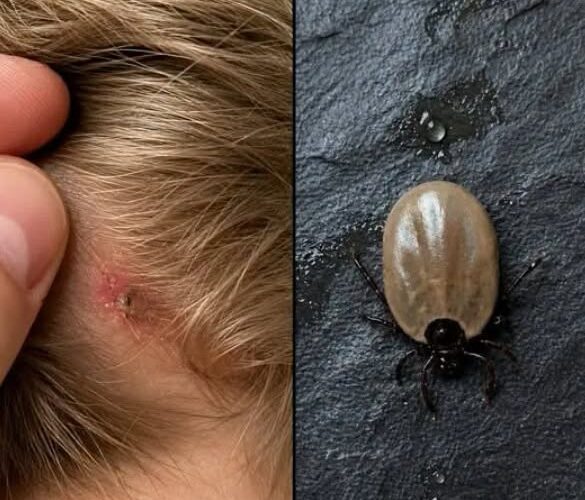
Discovering a tick in your child’s hair can be frightening. The most important thing, however, is to remain calm and remove the tick as quickly and gently as possible.
Step-by-step instructions: Grip firmly: Part the hair around the tick using hair clips, hair ties, or a comb. Examine the scalp directly and ask your child to sit still for a moment (a favorite story or toy can help). Grasp the tick as close to the skin as possible: Use fine tweezers or tick removal forceps.
Grasp the tick as close to the scalp as possible, near the abdomen. Never grasp it by the soft abdomen. Gently pull it out: Pull the tick straight up with a smooth, gentle motion. Do not twist the tick (unless you are using tick tweezers), pull on it, or wiggle it.
Disinfect the wound: Immediately after removing the tick, disinfect the area (e.g., with iodine solution or alcohol). Disinfect the tweezers and wash your hands.
Dispose of the tick: Flush it down the toilet, wrap it tightly with adhesive tape, or soak it in alcohol.
What to absolutely avoid:
Do not rub the tick with oil, butter, cream, or soap: Under stress, it will suffocate and regurgitate its stomach contents, including bacteria and viruses, directly into the wound.
Do not squeeze the tick’s abdomen: The pressure forces the tick’s infectious fluids into the child’s body.
Do not burn or tear it: Do not use matches or tear it off forcefully, as the head may break off.
What to do after removal: Note the date and the exact location on the tick’s head.
If the head is still embedded in the skin: Don’t panic. The body usually processes a small fragment the same way it would a splinter (it will rot or be absorbed by the body). Disinfect the area and do not try to remove the fragment too deeply with tweezers.
Observe your child for 3 to 4 weeks: Pay attention to the skin reaction and their overall health.
When to see a doctor:
If a red spot develops at the bite site (or on another part of the body) that gradually spreads (often with a lighter center and a diameter of more than 5 cm – a typical sign of Lyme disease).
If your child develops a fever, headache, severe fatigue, muscle or joint pain (flu-like symptoms) within 1 to 4 weeks.
If the bite site becomes severely swollen, reddened, hot to the touch, or oozes pus.