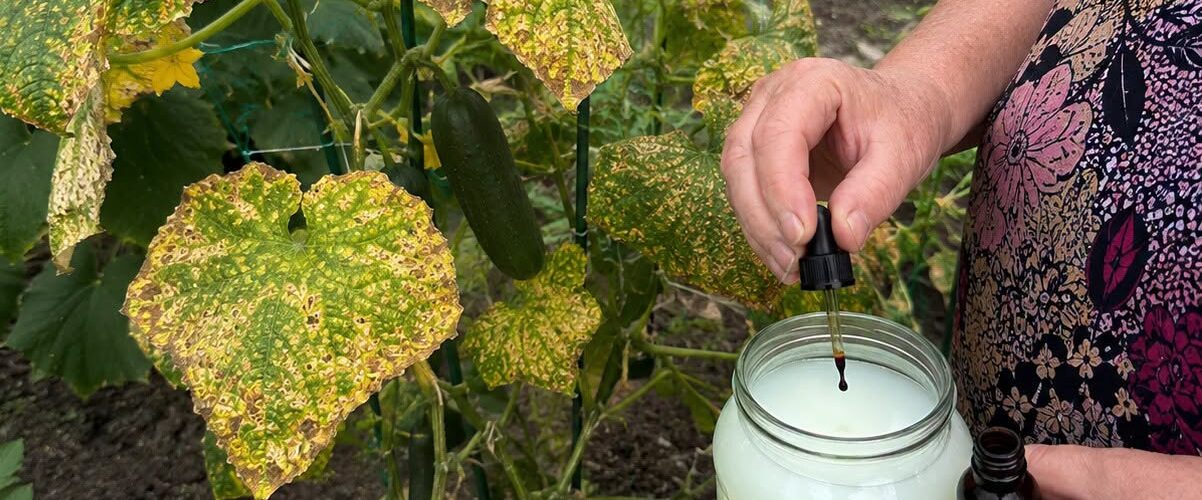
Yellowing of cucumber leaves (chlorosis) is a clear warning sign of the plant. The cause is usually a lack of nutrients, improper watering or fungal diseases.
If you follow these 6 proven tips, your cucumber plants will remain green and healthy, ensuring a bountiful harvest.
Water correctly: Evenly and directly at the roots
Cucumbers consist of more than 95% water and are extremely sensitive to stress.
Regularity: Water evenly with lukewarm water at room temperature. Watering too cold causes cold shock to the roots.
Keep the leaves dry: Always water directly on the soil around the plant. Wet leaves encourage fungal diseases such as powdery mildew and downy mildew, which lead to yellow and brown spots.
Avoid waterlogging: Roots need oxygen. In waterlogged soil, they rot and can no longer absorb nutrients.
Fertilize as needed (nitrogen and magnesium)
Cucumbers are heavy feeders and consume huge amounts of nutrients.
Recognizing a nitrogen deficiency: If the older, lower leaves turn yellow evenly first, they often lack nitrogen.
Recognizing a magnesium deficiency: If the surface of the leaves turns yellow while the veins remain green, there is a magnesium deficiency.
Solution: Fertilize every 1–2 weeks with an organic liquid vegetable fertilizer or nettle fertilizer. Ensure a balanced ratio of nitrogen, potassium and trace elements.
Choosing the right location and soil
A unsuitable location weakens the plant’s defenses.
Sun and heat: Cucumbers need a warm, sunny and sheltered location.
Fish substrate: The soil must be humus-rich, well-drained and rich in organic matter (e.g. compost).
Crop rotation: Do not plant cucumbers in the same spot every year. Leave at least 3–4 years between planting other cucurbits (such as zucchini or squash) to avoid soil-borne diseases.
Mulching for a stable soil environment
Mulching is one of the simplest and most effective methods in the vegetable garden:
Cover the soil around the stem with a layer of grass clippings, straw or wood fibers.
Advantages: Moisture does not evaporate as quickly, the soil remains warm and water splashing (which carries fungal spores from the soil to the leaves) is prevented.
Early identification and control of pests
Yellow, spotted or deformed leaves are often caused by pests:
Spider mites: Recognizable by fine cobwebs and yellow-spotted leaves (especially in dry greenhouse air).
Aphids: Usually found on the underside of leaves and suck plant sap.
Measure: If they are attacked, spray the plants with a mild soap solution in good time or plant beneficial insects such as predatory mites.
Thin out the lower leaves and use a trellis
Improved ventilation: Tie the cucumbers to stakes or trellis. This allows the leaves to dry more quickly after rain.
Remove old leaves: Regularly remove yellow or low-lying leaves with clean scissors. This saves the plant energy, improves air circulation and prevents the spread of fungal spores.
Rule of thumb: React immediately as soon as the first leaves change color. The faster you eliminate the cause (water, fertilizer, or pests), the faster the plant will recover and put its energy back into fruit production.