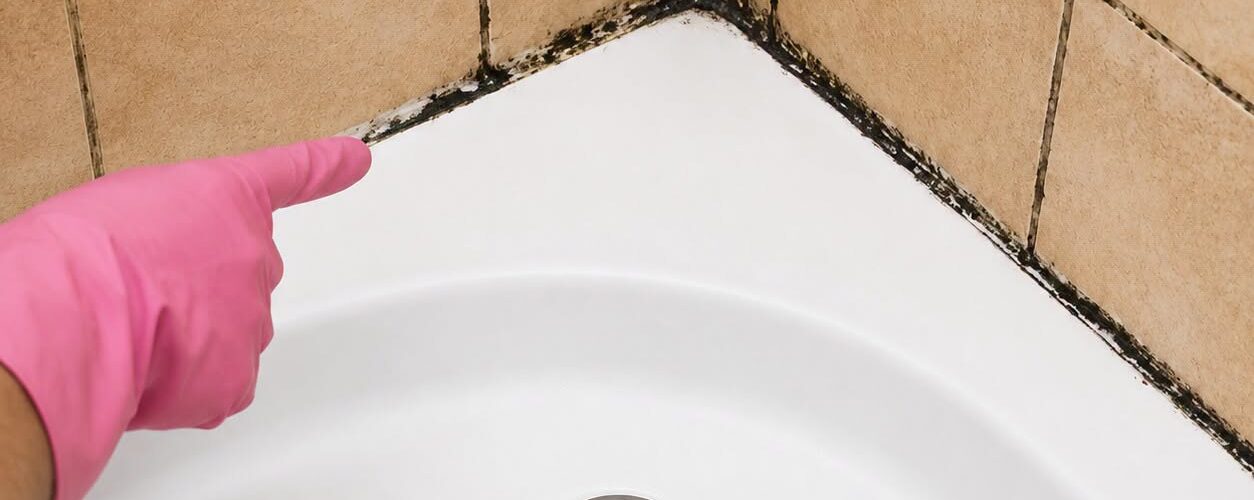
Black mold on silicone sealant joints in the bathroom or kitchen not only looks unsightly, but over time it also cuts deep into the material.
Problem: Conventional cleaning agents immediately run down the vertical joints. With Grandma’s trick with a cloth, the cleaning solution stays exactly where it’s supposed to work – without any expensive special sprays!
🧼 Homemade coating trick
The secret is to seal the solution on the joint for a few hours.
What you need:
Bleach or cleaning agent:
Option A (Cheap classic): Chlorine bleach (about €1.50 from the supermarket – dissolves the mold and completely removes the black color).
Option B (Vinegar Essence): If the mold is only very superficial (Caution: Vinegar will not discolor black pigments, but will kill spores).
Cotton swabs, paper towels or cotton strips
Old paintbrush or gloves
Prepare strips: 1 min.
Roll up a paper towel or cut cotton swabs into strips exactly the same length as the moldy joint.
Wrap the joint: 2 min.
Place the paper or cotton strips directly on the silicone joint affected by black mold.
Soak and leave to act: 6–12 hours
Thoroughly soak the paper in chlorine bleach (wear gloves and ensure good ventilation!). The damp paper will adhere to the silicone and keep the bleach active for hours. It is ideal to leave it on overnight.
Peel and rinse: 2 min.
The next morning, remove the strips and wipe the joint with clean water and a sponge. The black discoloration will usually disappear completely.
When does this trick stop working?
Silicone is elastic and porous. If the mold has already penetrated the silicone or damaged the material, the silicone inside will remain black. In this case, the only solution is to cut out and replace the joint.