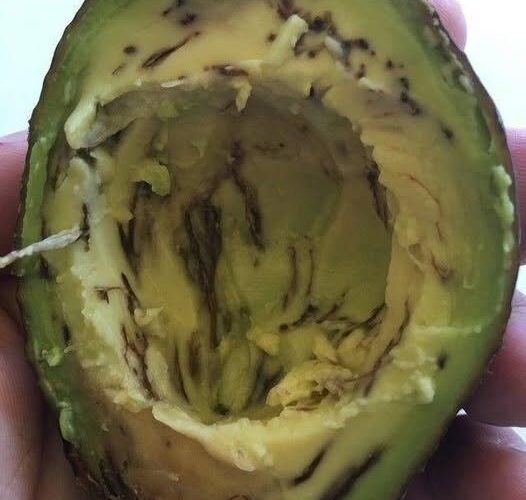
You can easily determine if an avocado is safe to eat by using a combination of touch, sight, and smell.
- Feel Test (Before Splitting)
Safe and Ripe: When pressed gently with the palm of your hand (not your fingers to avoid bruising), the skin gives slightly but the fruit holds its shape.
Spoiled: The avocado is extremely soft, mushy to the touch, or has deep dents on the surface. - Stalk Test
Pull back the small stalk at the top of the fruit:
Green under the stalk: The avocado is ripe and fresh.
Brown/black under the stalk: The fruit is overripe or starting to rot.
White or gray mold under the stalk: Throw away the avocado immediately.
- Check the flesh after crossing
Appearance of the flesh Condition What to do?
Light green to creamy Fresh and safe You can eat immediately.
Small brown fibers / spots Plant stress or incipient oxidation Safe – just cut out the unsightly parts.
Extensive black / dark brown areas Spoiled / rotten Unfit for consumption.
Gray, watery or fibrous pulp Decomposed Throw away.
Important note: Browning of the flesh after opening in the air is just natural oxidation (similar to an apple). However, if the avocado was dark immediately after being crossed, it is rotten. - Smell and taste
Smell: Fresh avocado has a mild, nutty smell. If we smell a sour, yellowish or chemical smell (reminiscent of nail polish remover or rancid fat), these are spoiled fats and do not eat the fruit.
Taste: If the pulp has a bitter or unpleasantly sour taste, spit it out immediately.