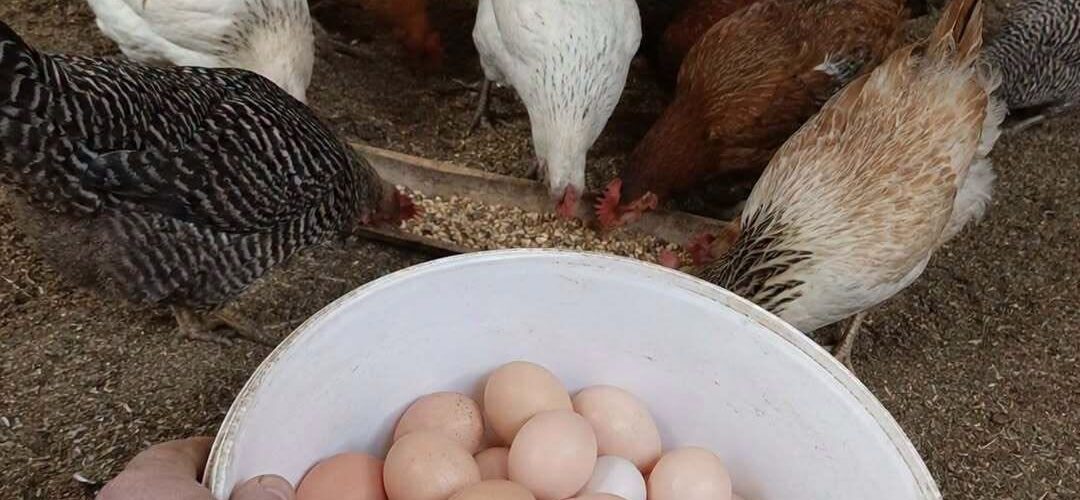
Summer is a great time for chickens because they have plenty of natural food. At the same time, however, the heat also means a lot of stress. If it’s too hot for a hen, her appetite decreases, which immediately leads to smaller eggs or even a complete cessation of laying.
If you want to collect lots of large eggs in summer, you need to adjust their diet. Here’s a tried-and-tested tip from experienced breeders:
The foundation is protein and calcium (but in a summer-friendly way). For the egg to grow large and have a strong shell, the hen needs these building blocks. Since she eats less in summer due to the heat, every bite must be nutritious.
A high-quality mix (N1 or N2): This should form the basis of their diet (ideally in the morning). In summer, you can slightly moisten the feed (until it’s crumbly) – chickens will eat it better in the heat. Caution: Moist feed spoils quickly in summer. Give the chickens only as much as they will eat immediately.
Calcium for strong eggshells: Crushed eggshells (always boiled/baked and crushed so the chickens don’t start pecking at their own eggs) or feed lime/whisk. Place it in a separate dish; the chickens will take exactly as much as they need.
Protein booster: A great summer trick is buttermilk, sour milk, or cottage cheese. They contain protein and calcium and pleasantly cool and refresh the chickens in the heat.
Summer refreshment and vitamins: Green fodder is great, but beware of the myth that you can simply let the chickens roam the mowed lawn. Long blades of grass can clog their feeders.
Weeds from the garden: Broccoli, dandelions, nettles (steam young shoots and chop them finely). A true vitamin cocktail!
Excess vegetables: Grated zucchini, cucumbers (they contain a lot of water and provide moisture), or watermelon rinds with bits of pulp. Frozen melon is a godsend on hot days.
Beware of too much corn!
Experienced breeders know that corn should not be included in the feed during the summer (or only in very small quantities). Corn is very energy-dense, causing the chickens to overheat and become fat. A fat hen will no longer lay eggs and will not produce large eggs. Wheat, oats, or barley are better choices in the summer.
The key to success: Ice water and shade! You can feed them the best food, but if the chickens have warm water, egg production will drop to zero.
The golden rule for summer: The water must be cold and clean. Change it 2-3 times a day, place the waterers in the shade, and feel free to add a few ice cubes.
Breeder’s tip: Add a little apple cider vinegar to the water once a week (about 1 tablespoon per liter). This helps regulate the pH level in the chickens’ stomachs, disinfects the water, and makes them more resilient to heat stress.
Do your chickens have access to grass or are they kept in a smaller, confined coop?