When outdoor temperatures reach tropical levels, your home can turn into an oven. If you don’t have air conditioning (or want to avoid it because of drafts or high electricity bills), you should take some smart steps.
Here are 8 tried-and-tested, scientifically sound tips for keeping your home comfortably cool.
Darken Your Home Before Sunrise
The biggest heat source in your home is sunlight streaming through your windows (the so-called greenhouse effect).
Rule of thumb: As soon as the sun shines in the morning, close your windows and blinds, shutters, or curtains completely.
Pro tip: Exterior blinds or shutters are the most effective because they trap heat before it reaches the window. If you have interior blinds, choose light colors that reflect light or invest in heat-reflective window film.
Ventilate only at night and in the early morning.
Opening a window during the day in the hope that the air will “freshen up” is the most common mistake. This only lets warm air from outside into the apartment.
Always keep the windows closed when it’s warmer outside than inside. Only open them wide late in the evening, at night, and in the early morning (ideally between 3 and 6 a.m. when the air is coolest). Create a draft by opening windows on opposite sides of the apartment.
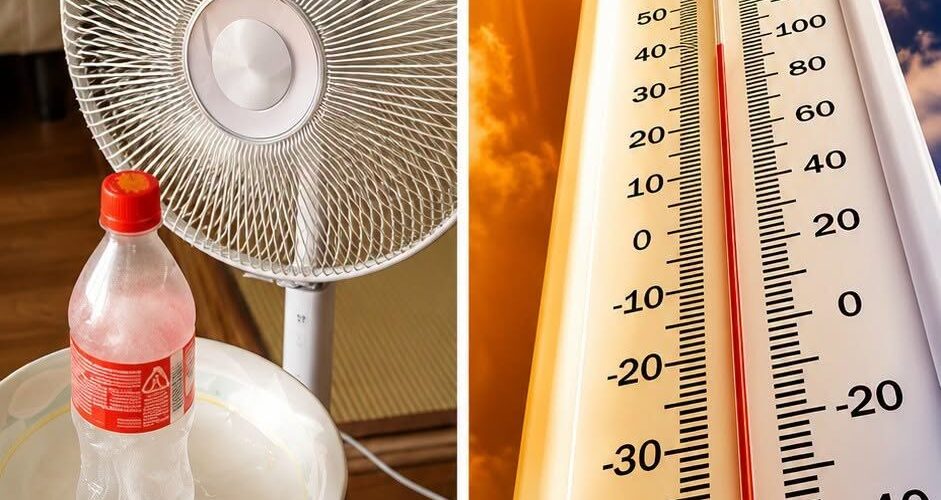
Build a “cooler” with a fan.
The fan itself doesn’t cool the air; it only circulates it (which causes sweat to evaporate from the skin and makes us feel cooler). You can, however, give it a little boost:
Place a bowl of ice or frozen water bottles in front of the fan. The air circulating around the ice cools down significantly and creates a pleasant, fresh breeze in the room.
Be mindful of internal heat sources (appliances). Every appliance that’s switched on acts like a small heater. On hot days, you should therefore observe the following:
Use the oven and stove sparingly (use cold dishes or prepare quick salads).
Switch off electronic devices (TV, computer, game console) completely instead of leaving them in standby mode.
If you are still using conventional light bulbs, replace them with LED bulbs – conventional light bulbs convert up to 90% of the energy into heat.
Use the trick with damp sheets.
The evaporation of water draws heat from the surroundings (so-called adiabatic cooling).
Soak sheets or large towels in cold water, wring them out, and hang them in an open window or over a door at night to air out.
The air flowing through the damp fabric cools down naturally, and the humidity rises, which pleasantly cools the airways in dry heat.
Adjust textiles and bedding.
Fluffy blankets, heavy carpets, and velvet cushions intensify the feeling of heat. Use thick carpets in the summer. Smooth floors (tiles, linoleum, wood) feel cold.
Change your bed linens to 100% linen, percale, or satin (natural cotton). These materials are breathable, wick away sweat well, and don’t feel as cold against the skin as synthetic materials (microfiber).
Cool down (from above and below): If it’s difficult to cool the room, focus on your body:
Cold shower? A lukewarm one is better. An ice-cold shower can cause a cold shock; the body constricts blood vessels to retain heat, and after a while, you feel even hotter. A lukewarm shower cools you down for longer.
Cool your pulse points: Hold your wrists, temples, neck, or ankles under cold water.
Hot water bottle trick: Fill a regular hot water bottle with cold water, put it in the refrigerator briefly, and then place it under your feet in bed.
Changing the direction of rotation of the ceiling fan
If you have a ceiling fan, set it to summer mode:
In summer, the blades should rotate counterclockwise (viewed from below).
This pushes the air directly downwards, creating a cooling breeze. (In winter, clockwise rotation pushes the warm air down the walls near the ceiling.)