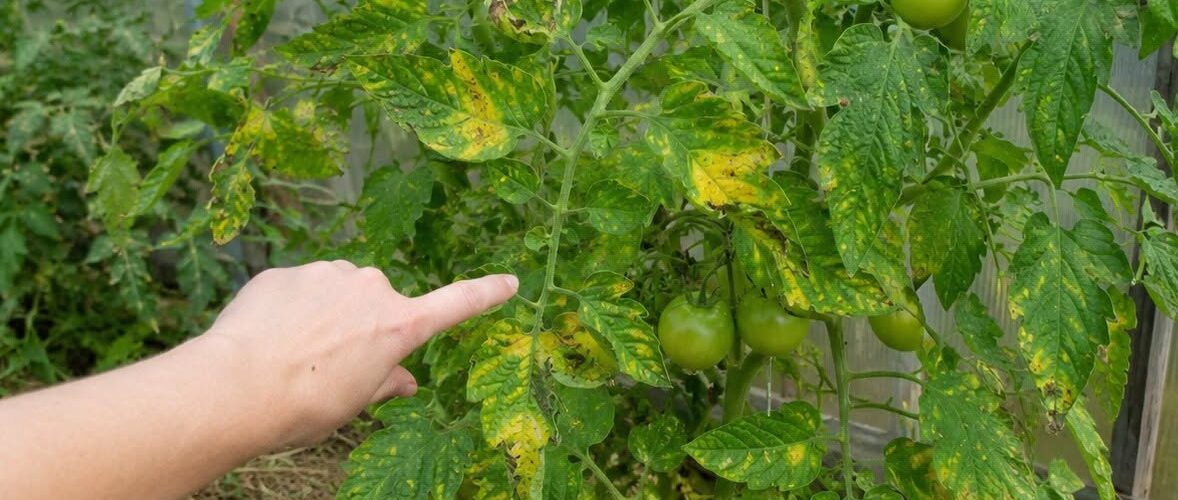
Yellow spots on tomato leaves are every home gardener’s nightmare. They are often the first warning sign of diseases that, in the worst-case scenario, can destroy the entire harvest. The most common culprits are fungal diseases such as late blight (Phytophthora infestans) or Alternaria leaf spot.
To save your plants, you don’t have to immediately resort to chemical pesticides. There are two organic sprays that you can easily make yourself to secure your harvest.
The 2 Best Instant Sprays Against Yellow Spots
Depending on what you have at home, you can mix one of the following solutions and thoroughly spray the tomatoes with it (including the undersides of the leaves!).
Option 1: The Milk Treatment (Natural Fungicide)
Milk contains lecithin and lactic acid bacteria, which inhibit fungal growth and simultaneously strengthen the plant’s defenses.
The recipe: Mix fresh whole milk or raw milk (not UHT milk, as the beneficial bacteria are killed in it) with water in a 1:8 ratio (e.g., 100 ml milk to 800 ml water).
Application: Spray the affected and surrounding leaves every two to three days.
Option 2: The Baking Soda Spray (Changes the pH)
Baking soda (sodium bicarbonate) changes the pH on the leaf surface to alkaline. Fungal spores hate this and cannot spread further.
The recipe: Dissolve one packet of baking soda and a small splash of cooking oil (to help the mixture adhere better to the leaves) in one liter of lukewarm water.
Application: Apply once a week in dry weather.
Important: The 3-Step First Aid
Spraying only helps if you simultaneously stop the spread. Proceed as follows:
Remove leaves: Immediately cut off any leaves that already have yellow or brown spots with clean scissors. Important: Dispose of them in the regular trash, never on the compost heap, as the fungal spores will survive there!
Water only from below: Fungi love moisture on the leaves. Never water tomatoes from above, always water directly at the base.
Remove lower leaves: Remove all leaves near the base of the plant up to a height of approximately 20–30 cm. Splashing water during watering is the main way fungi get from the soil onto the plant.