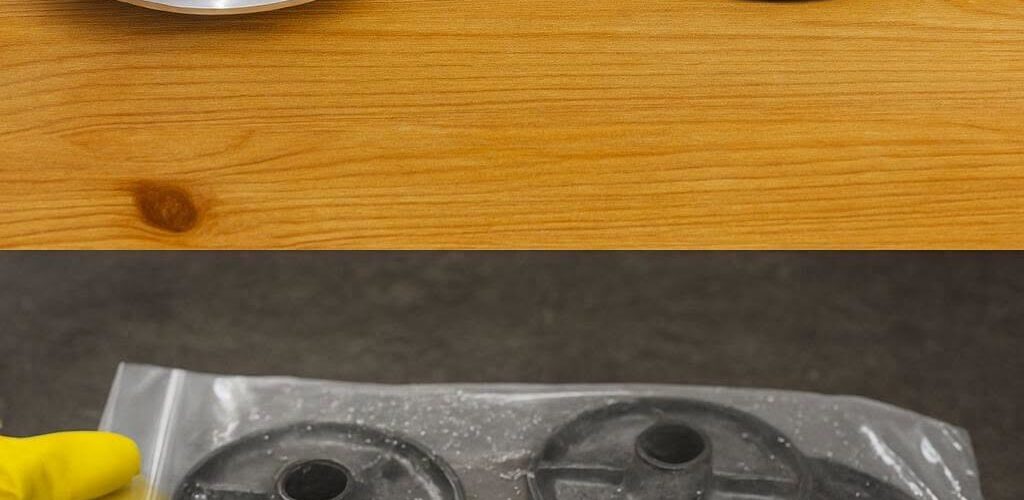
Cleaning cast iron and aluminum cooktops requires a delicate touch, as they are made of two completely different materials. Cast iron is robust but prone to rust, while aluminum is soft and extremely sensitive to harsh chemicals.
Here’s a simple, effective guide on how to clean both materials without damaging them.
- Cleaning Cast Iron Cooktops (The Classics)
Cast iron cooktops (often the typical black raised sections on older electric stoves) cannot tolerate prolonged exposure to moisture or harsh cleaners, as they will rust or lose their protective coating.
Step-by-Step Instructions:
Remove Large Remains: Carefully scrape off burnt-on residue with a cooktop scraper (glass-ceramic scraper) or a sturdy dish brush.
The home remedy duo (baking powder/baking soda): Mix baking powder or baking soda with a little water to form a thick paste. Apply this to the burnt-on areas and let it sit for 10–15 minutes.
Scrub: Rub the paste off with the rough side of a scouring pad.
Wipe with a damp cloth & dry IMMEDIATELY: Wipe away all residue with a damp cloth. Important: Immediately afterward, dry the cooktop completely with a kitchen towel.
Seasoning/Maintaining (Rust Protection): Put a few drops of neutral cooking oil (e.g., rapeseed oil) on a kitchen towel and rub it thinly onto the cooktop. Turn the cooktop on at the lowest setting for 1–2 minutes so the oil penetrates the pores.
⚠️ Caution: Never use harsh degreasers, oven cleaners, or dishwashers designed for cast iron. This will destroy the protective layer.
- Cleaning Aluminum Cooktops/Components
Aluminum is often found as the rim of ceramic cooktops or on gas stoves (as burner caps/holders). Aluminum is extremely sensitive to acids and alkalis. Aggressive cleaners cause the metal to oxidize, become dull, or darken.
Step-by-step instructions:
The gentle method (dish soap): Soak removable aluminum parts in warm water with regular, pH-neutral dish soap. This is usually sufficient for normal grease stains.
For stubborn dirt (use citric acid carefully): If you have burnt-on stains, mix some fine baking soda with a few drops of water (do not use vinegar or strong citric acid, as these can damage the aluminum!). Gently rub the affected areas with a soft cloth or a non-scratch sponge.
Rinse and dry: Wipe with clean water and dry the aluminum thoroughly immediately to prevent water spots.
⚠️ Caution: > * No soda (pure soda/washing soda): Soda destroys aluminum in no time (it turns black).
No steel wool: Aluminum scratches extremely easily.
Never put it in the dishwasher: The detergent is highly alkaline and permanently ruins the aluminum surface.
Summary: The Do’s and Don’ts
Material What works best What damages the surface
Cast iron: Baking soda paste, scouring pad, subsequent oiling Prolonged exposure to moisture (risk of rust), harsh chemicals
Aluminum: Mild dish soap, soft cloths, immediate drying Dishwasher, washing soda, strong acids, steel wool
Are you dealing with particularly stubborn, years-old encrustations, or is it a specific type of cooktop (e.g., the rings of a gas stove)?